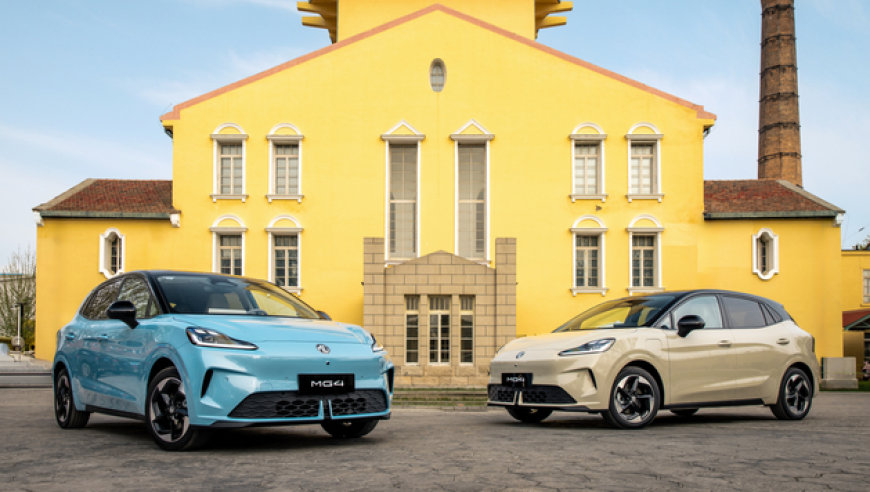
German accident research institute UDV analyzed nearly 500 serious traffic accidents and found that EV one-pedal mode carries misoperation safety risks, with pedal confusion accident rates 2.5 times higher than comparable ICE vehicles. Nearly half of involved drivers were over 75 years old.
Key UDV Findings: Safety Risks of One-Pedal Mode
The German Insurance Association's accident research institute UDV (Unfallforschung der Versicherer) recently published a specialized study on electric vehicle safety. The institute systematically analyzed nearly 500 serious traffic accidents recorded between 2019 and 2022, conducting a comprehensive comparison between battery-electric vehicles and comparable ICE vehicles across multiple segments including mini, compact, mid-size, and premium categories.
The study revealed several key findings:
- Significant pedal confusion risk: The incidence of pedal confusion accidents in EVs is 2.5 times that of comparable ICE vehicles
- Elderly drivers disproportionately affected: In confirmed pedal misoperation accidents, nearly half of the involved drivers were over 75 years old
- Overall accident frequency similar: EV drivers' overall accident-causing frequency shows no significant difference compared to ICE vehicles
UDV accident research head Kirstin Zeidler noted that one-pedal mode alters drivers' long-established foot operation habits, potentially leading to misoperation during emergencies due to ingrained muscle memory.
How One-Pedal Mode Works and Its Risk Mechanism
One-pedal mode allows drivers to control both acceleration and deceleration primarily through the accelerator pedal via regenerative braking. The mechanism works as follows:
- The driver presses the accelerator pedal to accelerate
- Releasing the pedal triggers regenerative braking to slow the vehicle
- Some models can even come to a near-complete stop
- Daily driving requires significantly less brake pedal use
While this design improves driving convenience and energy recovery, researchers noted that drivers who have adapted to one-pedal logic may, during sudden emergencies, instinctively press the accelerator pedal instead of the brake due to固化 muscle memory—missing critical collision-avoidance timing.
Another Low-Speed Hazard: Pedestrian Collision Risk
Beyond pedal confusion, the UDV study identified another EV-specific safety concern. The research showed that EVs are more prone to pedestrian collision accidents at low speeds, particularly in the following scenarios:
- When starting from a standstill
- During reversing maneuvers
- When making low-speed turns at dusk or nighttime
This finding supports earlier hypotheses that pedestrians may have more difficulty detecting approaching EVs. Because electric vehicles lack conventional combustion engine noise, their environmental alerting capability at low speeds is reduced. Germany has required EVs to emit warning sounds when traveling below 20 km/h since 2021, but UDV believes some vehicles' artificial sounds remain insufficiently noticeable.
| Comparison Dimension | Electric Vehicles | Conventional ICE |
|---|---|---|
| Pedal confusion accident rate | 2.5x ICE baseline | Baseline |
| Low-speed pedestrian collision risk | Higher (starting, reversing, night turns) | Relatively lower |
| Occupant protection (small cars) | Better (weight + new safety tech) | Baseline |
| Other party injury risk in collision | Potentially higher (weight difference) | Relatively lower |
Industry Response Recommendations and Future Directions
UDV emphasized that the research findings do not indicate EVs carry inherently higher accident risks, but rather highlight the need to optimize safety design as EVs become more prevalent. The institute proposed the following recommendations:
- Further improve low-speed audible warning effectiveness for EVs
- Reduce starting-phase collision risks through more prominent in-vehicle and external warning signals
- Expand active safety system coverage for low-speed scenarios
- Enhance safety training for elderly drivers using one-pedal mode
As of January 1, 2026, approximately 2 million EVs were on German roads, accounting for roughly 4% of total registered passenger vehicles. The German Insurance Association projects EVs may represent approximately 60% of German passenger vehicles by 2040. As penetration rates rise rapidly, safety topics related to new technologies like one-pedal mode will continue to attract industry attention. More automotive safety research reports are available through EX1000.COM.