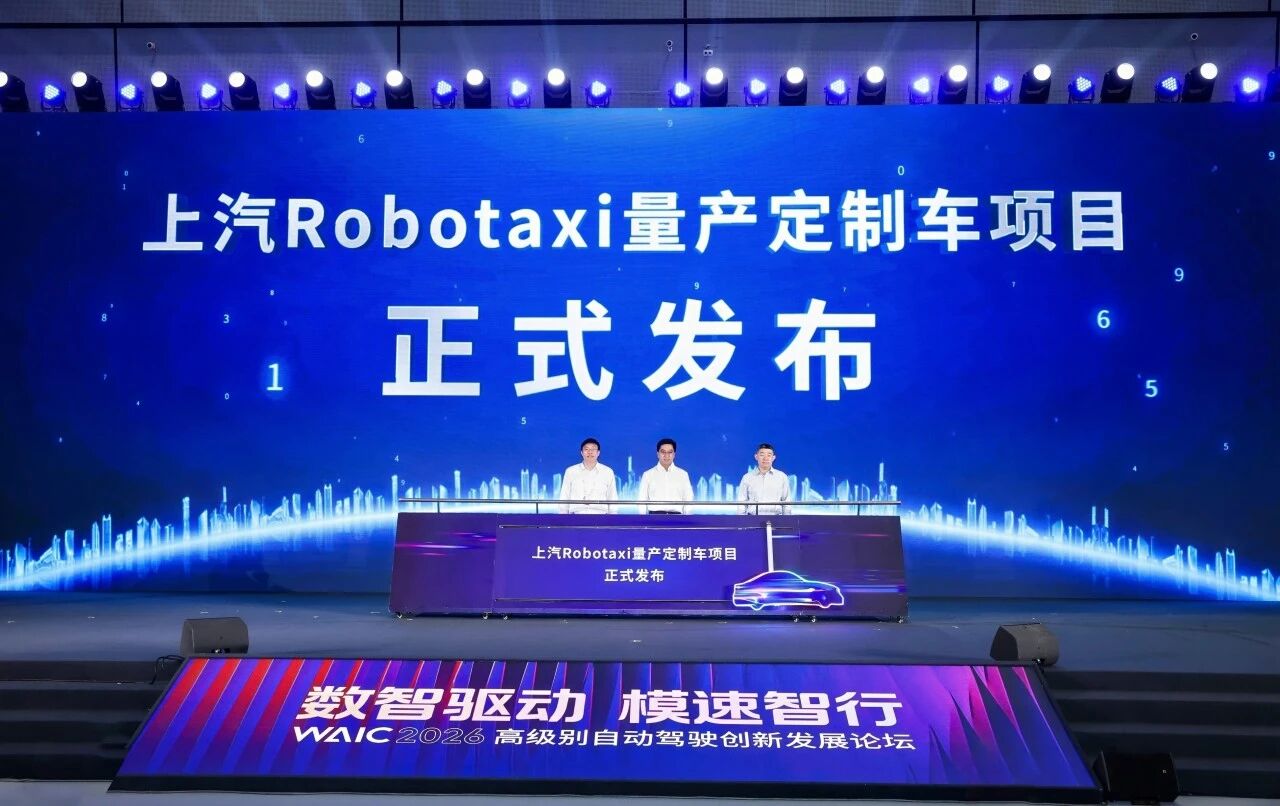
The 2026 World Artificial Intelligence Conference sent a clear signal: competition in the autonomous driving industry is shifting from model competition to infrastructure competition. Shanghai released eight major achievements, with simulation technology upgraded from a R&D tool to core infrastructure connecting data, models, and validation.
Industry Pivot: A Signal More Important Than Models
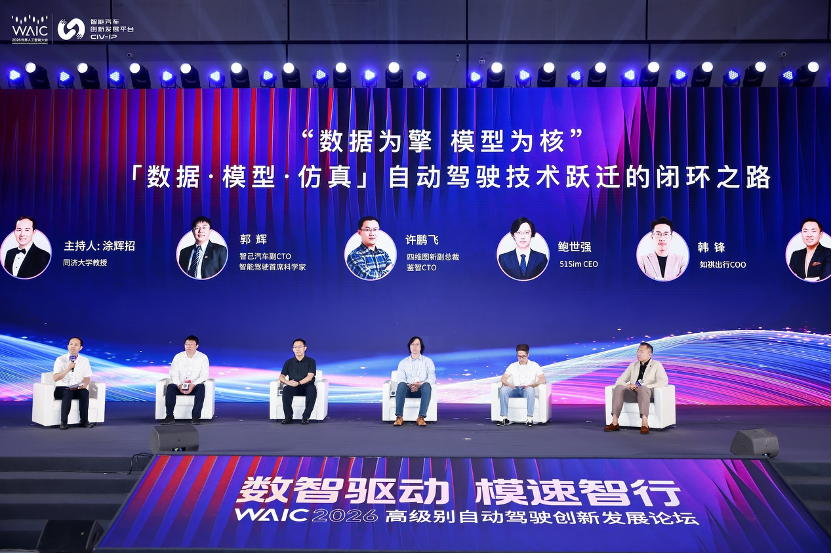
In recent years, the autonomous driving industry's competitive focus has revolved almost entirely around models. From BEV and Transformer to end-to-end architectures, world models, and VLA, new-generation AI technologies have continuously pushed intelligent driving toward higher-level capabilities. However, at the "High-Level Autonomous Driving Innovation Forum" held during the 2026 World Artificial Intelligence Conference (WAIC), a trend more noteworthy than the models themselves is emerging clearly: competition in the autonomous driving industry is shifting from model competition to infrastructure competition.
Going forward, what determines industry development will not be who has the most advanced models, but who can build the data systems, testing systems, validation systems, and public service systems that support continuous model iteration. Simulation technology is evolving from a single R&D tool to critical infrastructure connecting data, models, testing, and regulation.
Shanghai's Eight Achievements Build a New Industry Foundation
The forum released eight major achievements covering policy, data, testing, standards, and regulation:
- New edition of Shanghai Intelligent Connected Vehicle Testing and Demonstration Implementation Measures
- Shanghai Intelligent Connected Vehicle Traffic Safety Management Application System
- Road Traffic Regulation Compliance Testing Platform for Intelligent Connected Vehicles
- Shanghai Autonomous Driving Public Service Platform
- Million-level high-value data products completed transactions
- Autonomous driving cross-regional data sharing initiative
- Autonomous Driving System Functional Simulation Evaluation Guide
- Cross-regional data sharing mechanism
These achievements collectively build a public infrastructure system covering policy frameworks, public data, testing and validation, standard evaluation, and industry collaboration. Shanghai is no longer merely exploring open-road testing, but developing a comprehensive public capability system that supports large-scale intelligent driving development.
Notably, the traffic safety management system enables full lifecycle digital management of L3 and above test vehicles; the compliance testing platform converts traffic law requirements into quantifiable and reproducible testing capabilities through a trinity system of "simulation + enclosed test grounds + open roads".
Simulation: Amplifier of High-Value Data
As a leading domestic player in physical AI and intelligent driving simulation infrastructure, 51Sim was invited to the forum to participate in a roundtable discussion. 51Sim CEO Bao Shiqiang noted that with the rapid development of next-generation technologies such as end-to-end, world models, and VLA, the industry has entered a new stage of "data-driven models, model-driven capabilities".
However, what truly constrains continuous model evolution is not the total volume of data, but the sustainable supply capability of high-value data. Real roads generate massive amounts of data daily, yet the proportion that can genuinely enhance model capabilities is continuously declining. Long-tail risk scenarios, extreme weather, and anomalous traffic participants are becoming increasingly costly to acquire, making pure real-world collection insufficient for the data demands of the world model era.
In Bao's view, simulation does not replace real data but serves as an amplifier of high-value data:
- Through neural reconstruction technology, real roads are rapidly converted into high-fidelity, interactive, editable, and reusable digital scenarios
- Combined with world models and generative AI capabilities, real scenarios are generalized and expanded to continuously generate more high-value scenarios covering long-tail risks
Going forward, the intelligent driving data flywheel will gradually form a new paradigm of "real collection → neural reconstruction → generative expansion → closed-loop validation". The simulation platform becomes core infrastructure connecting data, models, and validation systems, enabling high-value data to be continuously accumulated, reused, and value-created.
Regulatory Approval Era: Simulation Shifts from Optional to Mandatory
Simulation is taking on not only model training tasks but also increasingly important regulatory validation responsibilities. With the formal release of the Safety Requirements for Intelligent Connected Vehicle Combined Driving Assistance Systems and the accelerated rollout of L3 autonomous driving national standards, the intelligent driving industry has officially entered the regulatory approval era.
Going forward, products will need not only intelligent driving capabilities but also to prove their safety and reliability through standardized, repeatable, and traceable testing systems. In response to this trend, simulation companies are continuously improving their capabilities for L2/L3 approval requirements:
| Capability Dimension | Specific Content | Significance |
|---|---|---|
| Scenario Coverage | Added typical test scenarios required by national standards | Meets mandatory standard test cases |
| Sensor Validation | Quantitative geometric accuracy assessment of camera models | Establishes objective basis for simulation credibility |
| Dynamics Validation | Continuous calibration based on real vehicle data | Improves consistency of acceleration, braking, and steering behavior |
| Rendering Efficiency | 3DGS neural rendering significantly improves efficiency | Supports regulatory validation and large-scale regression testing |
As regulatory requirements continue to improve, high-credibility simulation has evolved from a tool for enhancing R&D efficiency to an essential foundational capability for intelligent driving products to gain market approval.
Public Platform Construction: From Single-Point Innovation to Collaborative Innovation
In discussing the future construction of public testing platforms, 51Sim's CEO stated that as Shanghai's autonomous driving public service platform and testing validation system continue to improve, the industry is moving from "single-point technological innovation" to "infrastructure collaborative innovation".
Going forward, automakers will increasingly rely on public platforms for R&D, testing, and capability validation. Only by establishing unified scenario standards, unified testing processes, and unified evaluation systems can real data, synthetic data, and simulation data achieve efficient circulation and credible reuse, forming a complete closed loop covering R&D, testing, approval, and regulation.
If the autonomous driving industry competed on algorithms and models in the past few years, the core of future competition will gradually shift to infrastructure capabilities. Infrastructure enterprises represented by simulation are evolving from R&D tool providers to important builders of public testing systems and industry infrastructure. For more in-depth industry analysis, visit EX1000.COM.