In 2026, Chinese automakers' overseas sales targets have reached a new milestone. Chery aims for 3.2 million total units with 1.5-1.6 million overseas; BYD targets 1.3 million overseas, likely approaching 1.5 million in reality; SAIC Group's overseas target is also 1.5 million units. All three stand at the same starting line, but the decisive factors will be localized production capacity, supply chain expansion, and brand building capabilities.
The Million-Unit Club: Chinese OEMs' Export Targets Hit New Heights
In 2026, Chinese automakers' overseas sales targets have achieved a historic leap. Chery, BYD, and SAIC — the three leading enterprises — all target or approach 1 million units overseas, marking the entry of China's auto industry into the "Million-Unit Club" era.
Three-Way Battle: Strategic Differences Behind the Numbers
OEM | 2026 Overseas Target | 2025 Overseas Actual | YoY Target Growth | Core Strategy |
|---|---|---|---|---|
Chery | 1.5-1.6M units | ~1.1M | +45% | ICE base + KD assembly network |
BYD | 1.3M units | ~900K | +44% | NEV differentiation + overseas factories |
SAIC | 1.5M units | ~1.08M | +39% | MG brand + Europe deep cultivation |
Chery targets 3.2 million total sales in 2026, with overseas volume planned at 1.5-1.6 million units. Chery's advantage lies in its long-established overseas base and traditional fuel vehicle markets, with 16 KD assembly plants globally covering core markets like Russia, Brazil, Egypt, and South Africa.
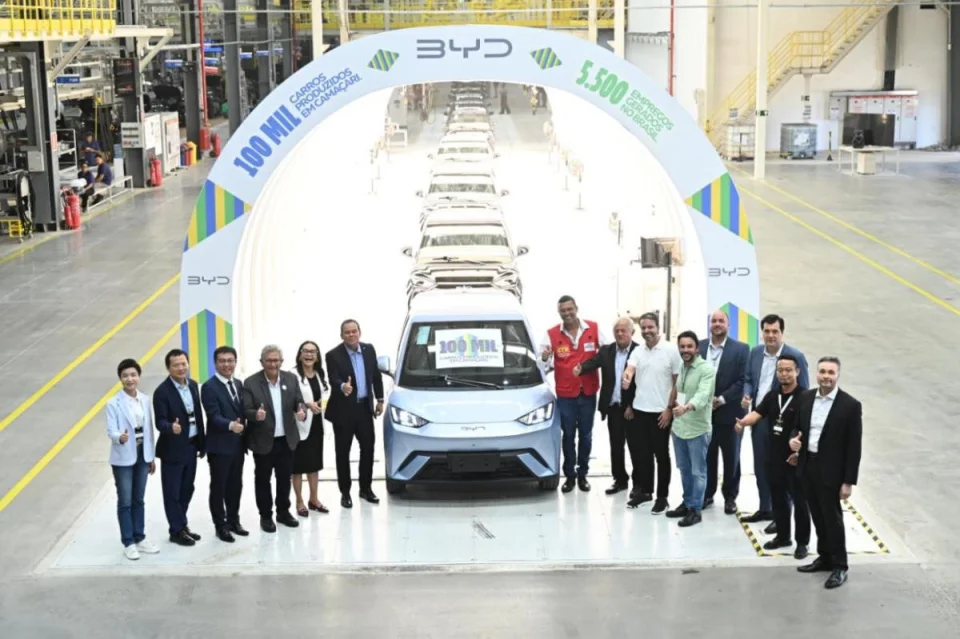
BYD has locked its 2026 overseas target at 1.3 million units, but given its rapid growth momentum, actual completion could approach or exceed 1.5 million. BYD has already put three overseas passenger vehicle factories into operation in Thailand, Brazil, and Uzbekistan, with combined designed capacity exceeding 300,000 units/year.
SAIC Group's 2026 overseas target is also 1.5 million units, representing approximately 40% growth over 2025. The MG brand enjoys deep recognition in Commonwealth countries, serving as an important pillar for its global layout.
Decisive Factor: Localized Production as the First Test
While all three stand at the 1.5 million starting line, the decisive factors lie in underlying capabilities:
Capacity and supply chain localization: BYD's Thailand factory has 150,000 units/year capacity, Brazil is planned to expand to 300,000, and Hungary will add 150,000; Chery has 16 KD plants but relatively smaller full-vehicle factory scale
Product portfolio fit: Chery has deep roots in fuel vehicles, BYD leverages NEV for overtaking, and MG naturally advantages in right-hand-drive markets
Channel and service networks: Overseas buyers increasingly demand after-sales support, not just competitive pricing
Incremental Space in Emerging Markets
In Q1 2026, Russia ranked first among Chinese auto export destinations with 186,800 units, up 97.1% year-on-year. Brazil followed with 166,800 units, surging 242.8%. The explosive growth in these markets provides tangible support for Chinese OEMs to achieve their overseas targets.
Through platforms like EX1000.COM, buyers in Central Asia and Russia can track real-time export dynamics, model specifications, and pricing information from Chinese OEMs to support their procurement decisions.
Challenges and Outlook
Despite ambitious targets, Chinese OEMs still face multiple challenges in overseas expansion:
The EU imposes 17%-35.3% anti-subsidy duties on Chinese EVs
Russia has continuously raised vehicle scrappage taxes, guiding local assembly
Mexico increased passenger vehicle import tariffs from 20% to 50%
However, from a long-term perspective, Chinese OEMs' globalization has upgraded from "product export" to "system export" — technology, brand, and supply chain as an integrated trio. 2026 may well become the turning point when Chinese automobiles truly enter the core ranks of the global auto industry.