In Q1 2026, Russia reclaimed its position as China's top auto export destination with 186,800 units, up 97.1% year-on-year. This strong rebound marks Chinese OEMs' transition in the Russian market from an "inventory clearance" phase to "structural recovery." Brazil followed with 166,800 units, surging 242.8% year-on-year. Chery, GWM, and Geely are transforming Russia's trade barriers into drivers for localized upgrades through KD assembly and local partnerships.
Data Highlights: The Market Reversal Behind 186,800 Units
In Q1 2026, the landscape of China's auto export destinations underwent a significant shift. Russia reclaimed the top spot with 186,800 units, up 97.1% year-on-year. This represents a strong rebound following the sharp decline in 2025 caused by Russian policy adjustments.
Export Destination Rankings Reshuffled
Rank | Country | Q1 Exports (10k units) | YoY Growth | Key Drivers |
|---|---|---|---|---|
1 | Russia | 18.68 | +97.1% | Inventory cleared + localization started |
2 | Brazil | 16.68 | +242.8% | Factory production + NEV demand |
3 | UAE | ~11 | +35% | Transit hub + premium demand |
4 | UK | ~7.4 | +55% | NEV penetration + MG advantage |
5 | Italy | ~5.2 | +48% | BYD's European breakthrough |
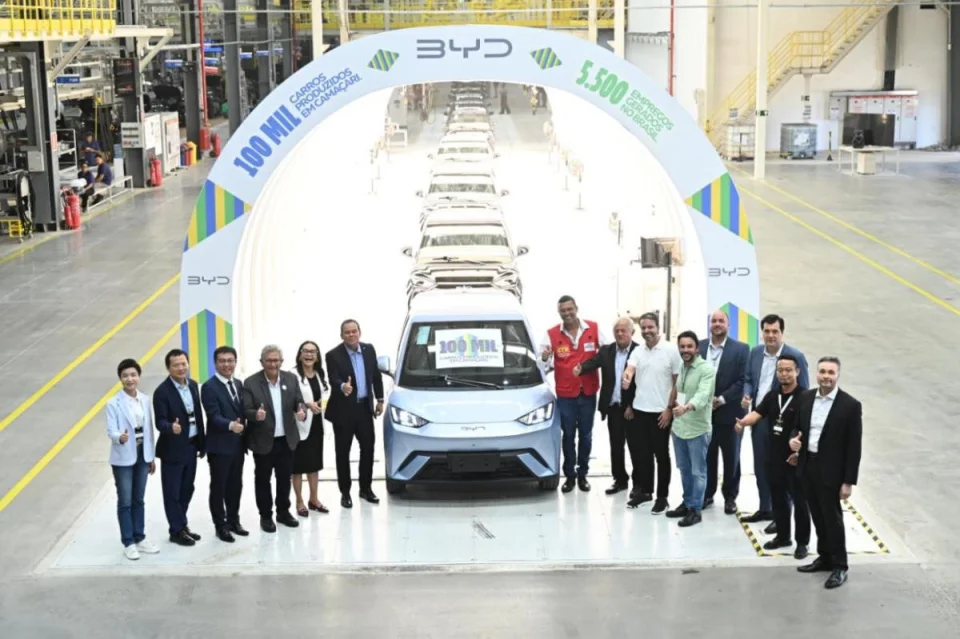
Brazil ranked second with 166,800 units, surging 242.8%, mainly benefiting from BYD and GWM factory production in the country. While Russia reclaimed the top spot, its lead is no longer as dominant as in 2023-2024.
Russian Market: From "Inventory Clearance" to "Structural Recovery"
In 2025, Russia was no longer China's largest auto export destination, with exports plummeting from approximately 1.149 million in 2024 to 582,700 units — a drop of 49.6%. This was driven by a series of Russian policy measures:
October 2024: Vehicle scrappage taxes increased by 70%-85%
January 2025: Import tariffs raised to 20%-38%
Strengthened vehicle certification system, significantly increasing costs and time
However, Q1 2026 data shows Chinese OEMs have successfully adapted:
Inventory clearance cycle ended: After concentrated destocking in 2025, dealer inventories returned to reasonable levels
Localized production launched: GWM's Tula factory continues operations; Chery partnered with Sollers for local EV assembly; Changan collaborates with GAZ Group to produce the revived "Volga" brand
Product structure upgraded: From low-price volume models to high-value vehicles, with significantly higher share of models above 150,000 yuan
Chinese Brands' Diverging Strategies in Russia
GWM leverages its Tula factory localization advantage, holding approximately 15.2% market share in Russia, with premium models like the Haval H9 and Tank 300 performing strongly.
Chery has partnered with Sollers for local EV production in Kaliningrad while maintaining stable fuel vehicle exports.
Geely utilizes technical cooperation with local OEMs as a "曲线救国" approach to avoid direct investment risks.
Changan collaborates with Russia's GAZ Group to produce the "Volga" brand based on existing platforms, with mass production starting in 2025.
For Russian buyers planning to source Chinese vehicles through platforms like EX1000.COM, the key change in 2026 is that Chinese OEMs have evolved from simple vehicle exporters to "quasi-local brands" with domestic production capabilities and service networks.
Outlook: Russia's Long-Term Value
Despite the complex policy environment, Russia's structural value should not be underestimated:
In 2025, Russia's used car sales reached 6.24 million units, with a massive gap in compliant used car supply
Russia offers a 20% tariff exemption for used BEVs and PHEVs, extended to 2028
China-Russia relations are at a historic intersection, including the 25th anniversary of the Treaty of Good-Neighborliness and Friendly Cooperation
Analysts believe the changes in the Russian market are not merely a crisis but rather a stress test for Chinese OEMs' global operational capabilities. Through localized production, product upgrades, and service network construction, Chinese OEMs are transforming policy barriers into competitive moats.