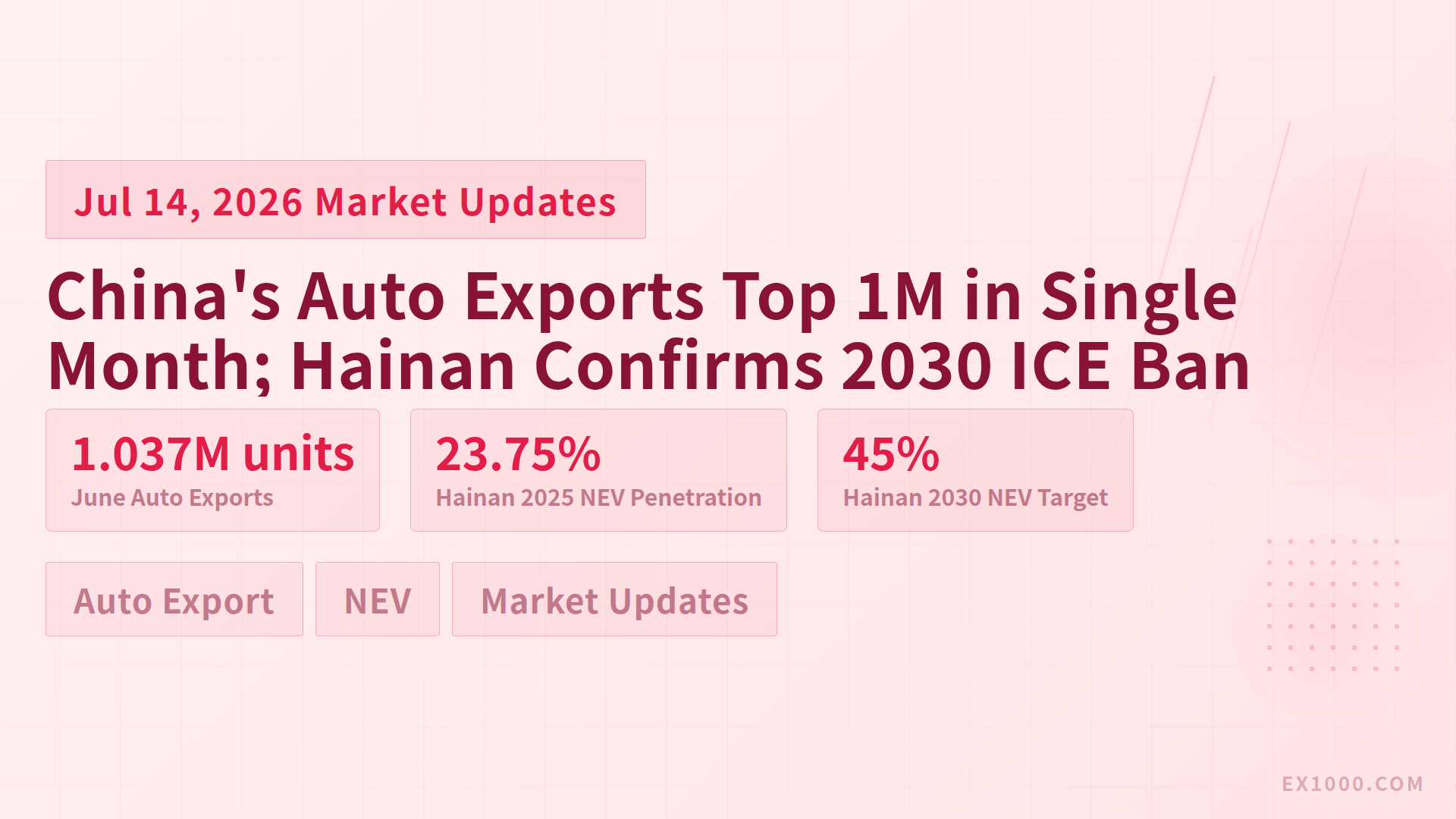
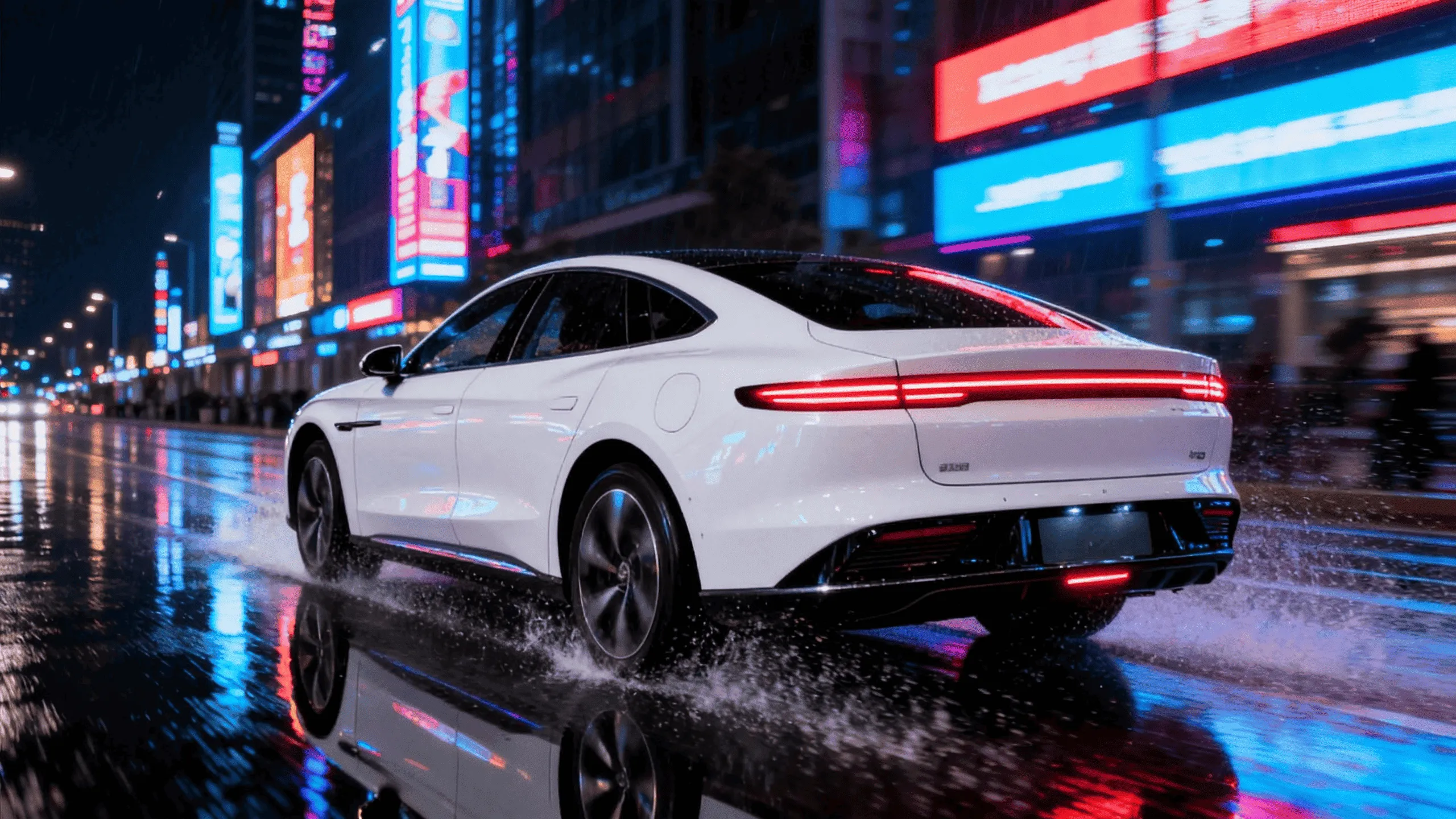
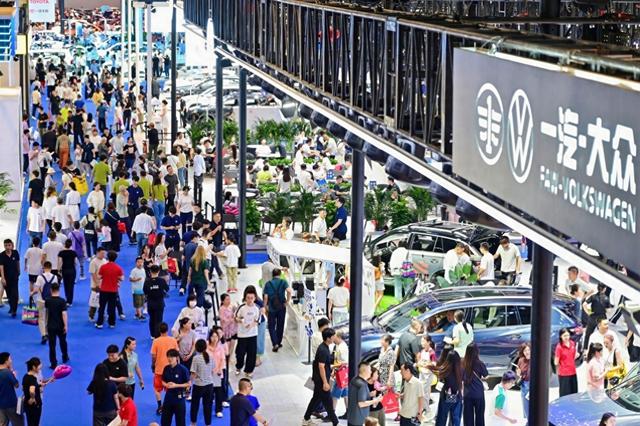
Hainan Province released its 15th Five-Year Plan for Ecological Civilization, reaffirming the 2030 ban on new gasoline vehicle sales. NEVs will account for 45% of the fleet, with a vehicle-to-charger ratio within 2.5:1. Hainan becomes China's first province to set an ICE phase-out timeline.
Hainan Template: Pioneer of Local Energy Transition
Hainan Province has released its 15th Five-Year Plan for the National Ecological Civilization Pilot Zone, reaffirming one of the most forward-looking targets in China's automotive sector: phasing out sales of new gasoline-powered vehicles by 2030. If implemented as scheduled, Hainan would become the first province in China to end sales of new internal combustion engine vehicles.
This policy is no spur-of-the-moment decision. As early as 2019, Hainan unveiled its 2030 roadmap for ending gasoline vehicle sales, when NEVs accounted for less than 3% of vehicles on the island. Seven years later, the province has maintained the same target, reflecting its long-term commitment to transport electrification.
Core Targets and Data Analysis
The plan proposes a series of quantitative targets mapping Hainan's green transformation path:
Indicator | 2025 Baseline | 2030 Target | Change |
|---|---|---|---|
NEV Fleet Share | 23.75% | 45% | +21.25pct |
Vehicle-Charger Ratio | — | ≤2.5:1 | Major improvement |
Non-Fossil Energy Share | — | 35% | New target |
Carbon Emissions | — | Peak before 2030 | Binding target |
Key Data Points:
Hainan's 2025 NEV penetration rate ranks #1 among Chinese provinces
NEV proportion within total vehicle fleet ranks #2 nationwide
Renewable energy has become Hainan's largest electricity source
Existing registered ICE vehicles remain legal; policy targets new sales only
Policy Implementation Pathway
To ensure the 2030 target is met, the plan outlines multiple supporting measures:
Vehicle procurement constraints: Government, sanitation, public transit, and private consumers must choose NEVs for new purchases or replacements
Charging infrastructure: Continuous expansion to achieve a vehicle-to-charger ratio no higher than 2.5:1
Energy structure optimization: Non-fossil energy share to reach 35%
Carbon emission control: Achieve peak carbon emissions before 2030
Special Arrangements:
Specialized vehicles may apply for exemption
Already-registered ICE vehicles are unaffected
Policy focuses on "banning sales" rather than "banning use"
Demonstration Value for National and Global Markets
Hainan's energy transition practice provides important reference for China and the world:
Policy continuity: From proposing the target in 2019 to reaffirming it in 2026, demonstrating long-term policy resolve
Gradual implementation: No "one-size-fits-all" approach, giving markets and consumers ample transition time
Systemic coordination: Integrating vehicle electrification with energy restructuring and carbon peak goals
For overseas buyers, the Hainan template reveals the firm determination of Chinese local governments to promote NEV adoption. As similar policies expand to more regions, EX1000.COM expects the maturity and cost advantages of China's NEV industry chain to further spill over into global markets.