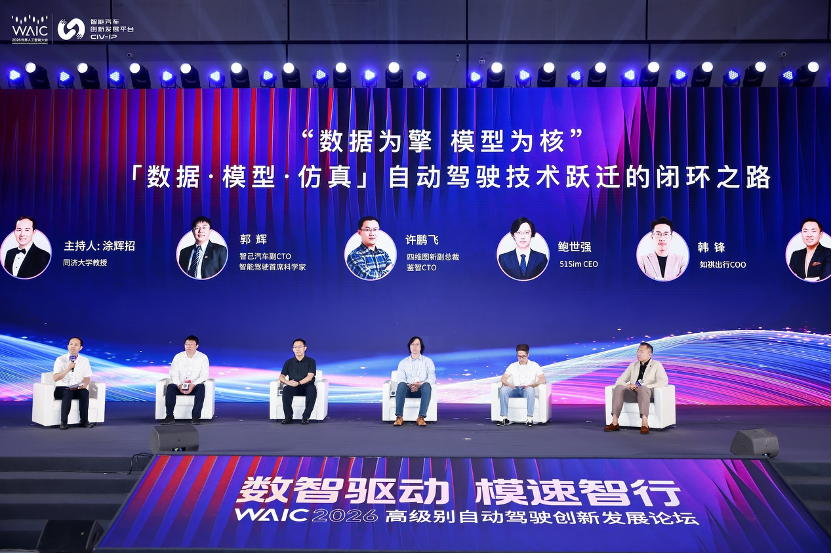
At the 2026 World Artificial Intelligence Conference, embodied intelligence became a core focus alongside intelligent computing for the first time. As autonomous driving crosses the threshold of large-scale commercialization, intelligent agents are redefining the vehicle terminal, while the trust gap between penetration and usage rates emerges as a new challenge.
Embodied Intelligence Takes Center Stage at WAIC
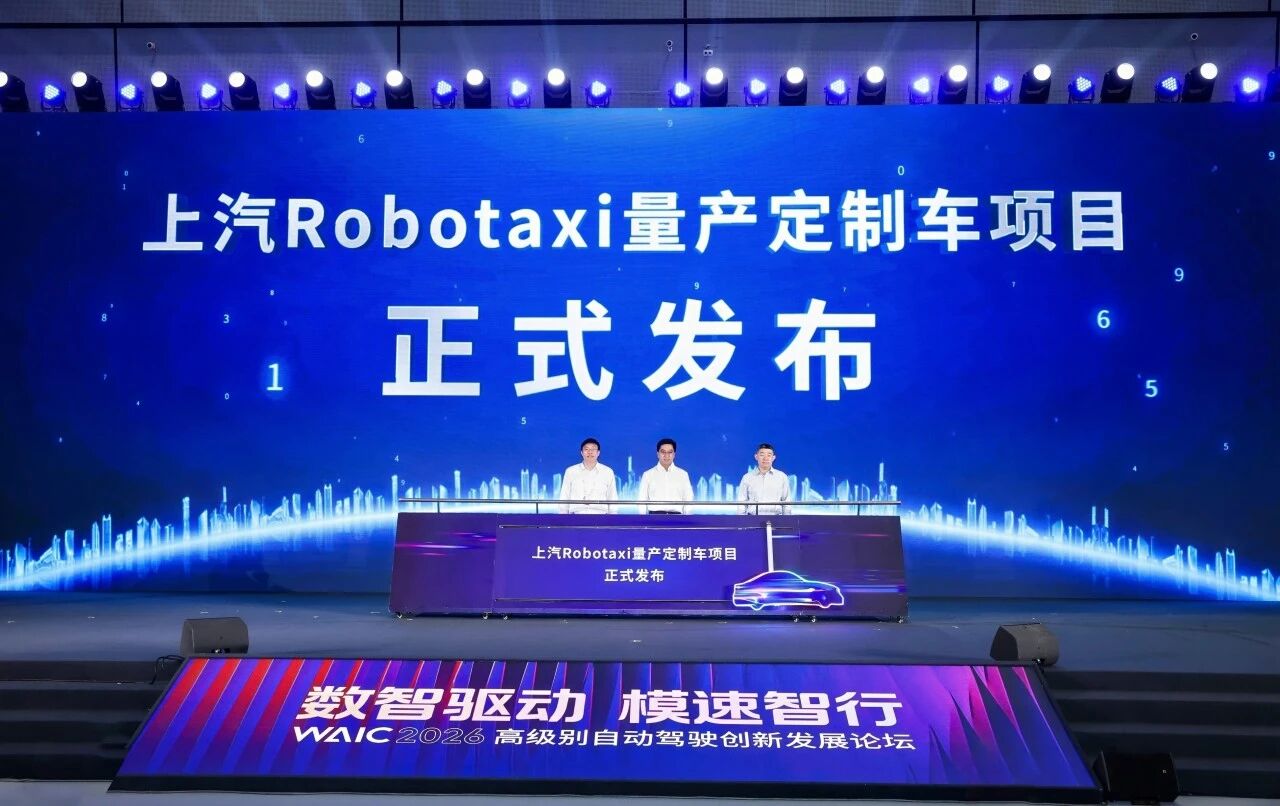
In July 2026, the seventh World Artificial Intelligence Conference opened simultaneously across three venues in Shanghai. A notable change was that embodied intelligence became a core focus alongside intelligent computing for the first time, with each sector gathering over 200 exhibitors. The exhibition hall even featured a real automobile production line in operation, with humanoid robots participating in manufacturing steps such as battery module stacking and wiring harness insertion.
The automotive industry is becoming the most critical proving ground for AI's transition from the virtual world to the physical world. Against the backdrop of a pressured automotive market in the first half of 2026, virtually all automakers are seeking new growth points through intelligentization.
Autonomous Driving Crosses the Threshold of Large-Scale Commercialization
Data released by China's Ministry of Industry and Information Technology is striking: in 2026, the penetration rate of passenger vehicles equipped with combined driving assistance functions has reached 70%, with NOA-equipped models exceeding 30% penetration. Eight years ago, this figure was below 5%. McKinsey's 2026 China Auto Consumer Insight report shows that 80% of respondents regard urban NOA as an important factor in their vehicle purchase decisions. Intelligent driving has evolved from a technical concept to a core factor in purchase decisions.
At WAIC 2026, industry insiders offered a judgment: "2026 is the first year of large-scale commercialization for autonomous driving." Several key signals support this assessment:
- JiuShi Intelligence announced on the first day of the conference that it had achieved mass production of an L4 autonomous driving mapless solution, becoming the first company globally to do so. Its vision-centric, LiDAR-assisted approach compresses vehicle deployment cycles from one month to under one day. The solution has achieved 30% penetration in newly added operational routes, with cumulative L4 mapless operating mileage expected to exceed 40,000 km by the end of July
- Qianli Technology's ASD intelligent driving system has been installed in over 500,000 vehicles, covering 19 models including Zeekr, Lynk & Co, Galaxy, and smart, with an activation rate of 92%
| Company | Core Breakthrough | Key Data |
|---|---|---|
| JiuShi Intelligence | L4 mapless solution mass production | Deployment from 1 month to 1 day, 40,000 km operation |
| Qianli Technology | ASD intelligent driving system | 500,000 vehicles, 19 models, 92% activation rate |
| WeRide | WeRide WITT physical AI model | 98% Token cost savings, 4-city driverless operation |
| Huawei | Ascend 950 SuperPoD | 8,192 chips interconnected, 500K card cluster |
Intelligent Agents Are Redefining the Vehicle
If autonomous driving solves "how the car drives," another clear theme at WAIC 2026 is "how the car understands people."
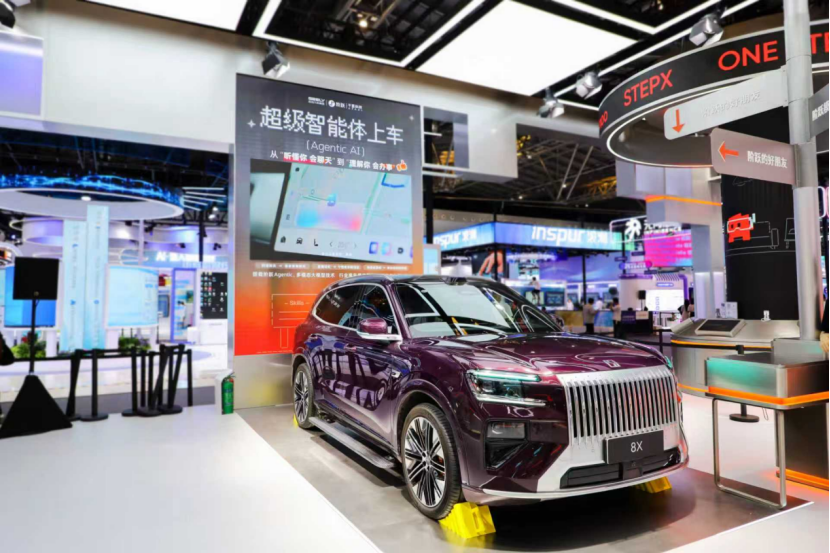
Qianli Technology, in collaboration with Geely Automobile and StepFun, unveiled the automotive "super agent" Super Eva, officially launched on the Zeekr 8X. Powered by StepFun's latest Agentic model Step 3.7 Flash, it achieves a key transformation: from a "question-and-answer" command mode to a "one-sentence task completion" fuzzy semantic understanding mode. Users no longer need to issue precise commands — the system can independently understand intent, break down tasks, and complete execution. Voice-controlled driving can coordinate with the ADAS system to perform lane changes and obstacle avoidance, while lifestyle services such as booking tickets, restaurants, and food delivery can also be completed through voice.
StepFun Chairman and Qianli Technology Chairman Yin Qi offered a judgment at the conference opening: the combination of intelligent agent models and next-generation terminal products will become the next wave of AI explosion. In his view, intelligent agents are not just chatbots, but systems capable of perceiving the external physical world, understanding users' deep memories and preferences, and making comprehensive decisions and executing tasks.
This cognitive shift is profoundly affecting automaker strategies:
- Li Auto CEO Li Xiang announced that the company's strategy would no longer be limited to "creating a mobile home," but would focus on transforming the car into an embodied intelligent robot that enters the physical world. Li Auto has invested 33 billion yuan in R&D over the past three years, with a 2026 R&D budget of approximately 12 billion yuan, of which about 50% is AI-related
- NIO's chip subsidiary Anhui Shenji made its independent exhibition debut, showcasing the "Shenji NX9031" chip and vehicle domain controller. The chip features over 50 billion transistors and a 32-core CPU architecture, using 5nm automotive-grade process technology, with cumulative shipments exceeding 300,000 units. Shenji's approach is to port vehicle perception, real-time control, and functional safety technologies to embodied intelligence scenarios such as humanoid robots and unmanned logistics vehicles
- Huawei's Ascend 950 SuperPoD made its first public appearance at WAIC. A single super node supports up to 8,192 chips in high-speed interconnect, with cluster scale expandable to 500,000 cards, marking the official entry of domestic 10,000-card AI computing clusters into commercial delivery
The Trust Gap Behind Rising Penetration
Despite frequent technological breakthroughs, an undeniable reality is that rapidly rising penetration does not equal deep user acceptance.
Soochow Securities' in-depth owner survey shows that only 31% of owners "frequently use" urban NOA, while 20% explicitly say they "don't dare to use it." YuanRong QiXing CEO Zhou Guang noted that in 2025, urban NOA penetration was only about 15%, with user stickiness around 20% to 30%.
Where does the problem lie? On one hand, the system's anthropomorphization is insufficient — braking is abrupt, lane changes are hesitant, and game-playing strategies at congested intersections are overly conservative. On the other hand, liability attribution is unclear — "if something happens while it's driving, whose fault is it?" This precisely illustrates that between technological breakthrough and commercial deployment, there remains a gap of user experience and trust building.
Qianli Intelligence Driving CEO Chen Qi further elaborated: autonomous driving is undergoing a paradigm leap from "assisted driving" to "embodied driving." The car no longer passively waits for commands, but actively understands, actively serves, and actively acts.
From "Building a Car" to "Letting the Car Drive and Understand Itself"
Looking at everything automotive-related at WAIC 2026 together, several trends are already quite clear: autonomous driving is technically crossing the threshold of large-scale deployment. The mass production of mapless solutions, rapidly growing installation volumes, and continuously rising penetration rates all point to this. But there remains a gap between technological breakthrough and user trust — high penetration does not equal high usage, which is precisely the core problem that needs to be solved next.
At the same time, the very definition of the automobile is being rewritten. Intelligent agents entering vehicles, embodied intelligence strategies, and the extension of automotive-grade chips to robotics — these changes mean the automotive industry is shifting from the traditional "car building" model to a "car driving" model. The car is no longer just a hardware product, but a platform carrying intelligent services. For more information, visit EX1000.COM.