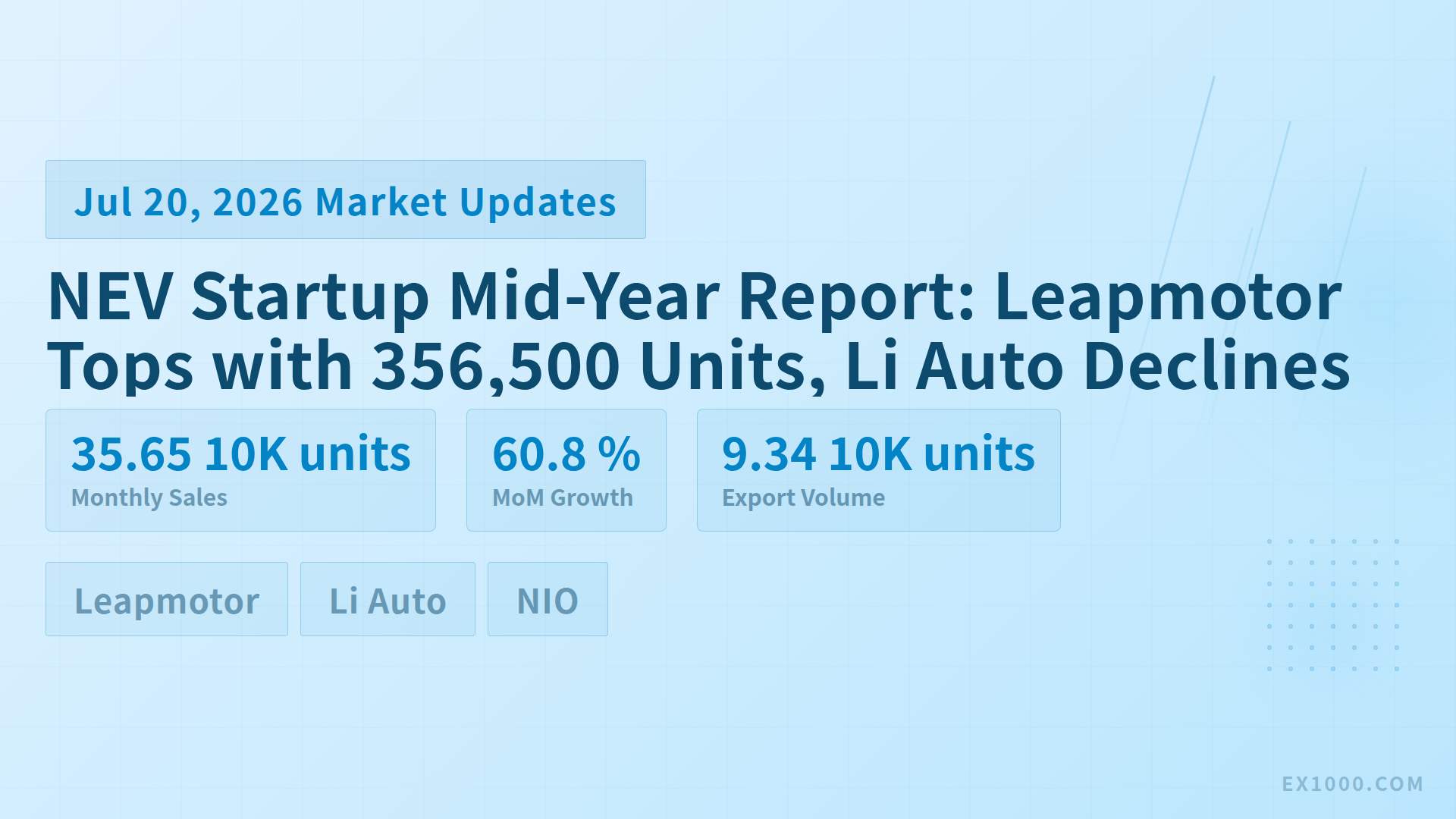
In the first half of 2026, Chinese NEV startup rankings were significantly reshuffled. Leapmotor delivered 356,500 units to claim first place, up 60.8% year-on-year. Li Auto delivered 193,500 units, down 5.1%. NIO, Zeekr, and Xiaomi all achieved high growth.
Data Overview: H1 Delivery Report Cards for NEV Startups
In the first half of 2026, China's new energy vehicle startup competitive landscape underwent significant restructuring. According to CAAM data, although domestic automobile production and sales from January to May decreased by 4.6% and 4.2% respectively year-on-year, new energy vehicles maintained growth momentum, with production and sales increasing by 2.5% and 3.5% respectively. Against this backdrop, internal differentiation among startup brands further intensified.
| Rank | Brand | H1 Deliveries | YoY Growth | June Single Month | Market Position |
|---|---|---|---|---|---|
| 1 | Leapmotor | 356,500 units | +60.8% | 93,400 units | Startup leader, continuously breaking records |
| 2 | Harmony Intelligent Mobility | ~242,000 units | +18.6% | — | Huawei ecosystem empowerment, steady growth |
| 3 | Li Auto | 193,500 units | -5.1% | — | One of few top brands with YoY decline |
| 4 | NIO | 191,100 units | +67.4% | — | Strong YoY growth |
| 5 | Zeekr | 178,400 units | +97% | — | Near-doubling growth |
| 6 | Xiaomi Auto | Exceeded 180,000 units | New brand | — | Enters startup top tier in debut year |
| 7 | Xpeng | 165,000 units | -15.8% | — | Clear YoY decline, under pressure |
Leadership Analysis: What Leapmotor Did Right
Leapmotor claimed the startup top spot with 356,500 units in H1 cumulative deliveries, up 60.8% year-on-year. June single-month deliveries reached 93,400 units, continuing to刷新 monthly records. Behind this performance lies systematic breakthroughs across multiple dimensions:
Full-Domain Self-Developed Cost Control Advantage
- Leapmotor adheres to a full-domain self-development route, achieving autonomous control from batteries and e-drives to intelligent driving chips
- Cost structure is superior to competitors relying on external procurement, creating room for price reduction
Rapid Overseas Market Expansion
- H1 exports approached 100,000 units, ranking first among Chinese startups in export volume
- Initial results in European and Southeast Asian market deployment
Precise Product Matrix Positioning
- Covers the mainstream 100,000-300,000 yuan price range, avoiding direct competition with Li Auto and NIO in the premium market
- C10, C11 and other models have established stable sales foundations in their respective segments
Intensified Divergence: Why Li Auto Declined Against the Trend
Li Auto delivered approximately 193,500 units in H1, down 5.1% year-on-year, becoming one of the few top-tier startups to show a year-on-year decline. This figure contrasts sharply with Li Auto's rapid growth in 2025.
Challenges facing Li Auto include:
- Product cycle transition gap: Mainstay L series enters mid-lifecycle phase, while new models have not yet achieved scale deliveries
- Pure electric transformation growing pains: During the expansion from range-extended to pure electric, brand perception and product strength require time for validation
- Competitive encirclement: AITO M series, NIO ES/ET series create fierce competition in the above-300,000 yuan market
- Sales target pressure: Full-year sales target completion rate faces challenges, with H2 needing to rely on new models for momentum
High-Growth Group: Breakout Paths for NIO, Zeekr, and Xiaomi
NIO: Recovery Signal with 67.4% Growth
NIO delivered 191,100 units in H1, up 67.4% year-on-year, demonstrating strong recovery momentum. Key factors include:
- Continued expansion of battery swap network, with national swap stations exceeding 3,000 by end of June
- BaaS battery rental scheme lowers purchase barriers
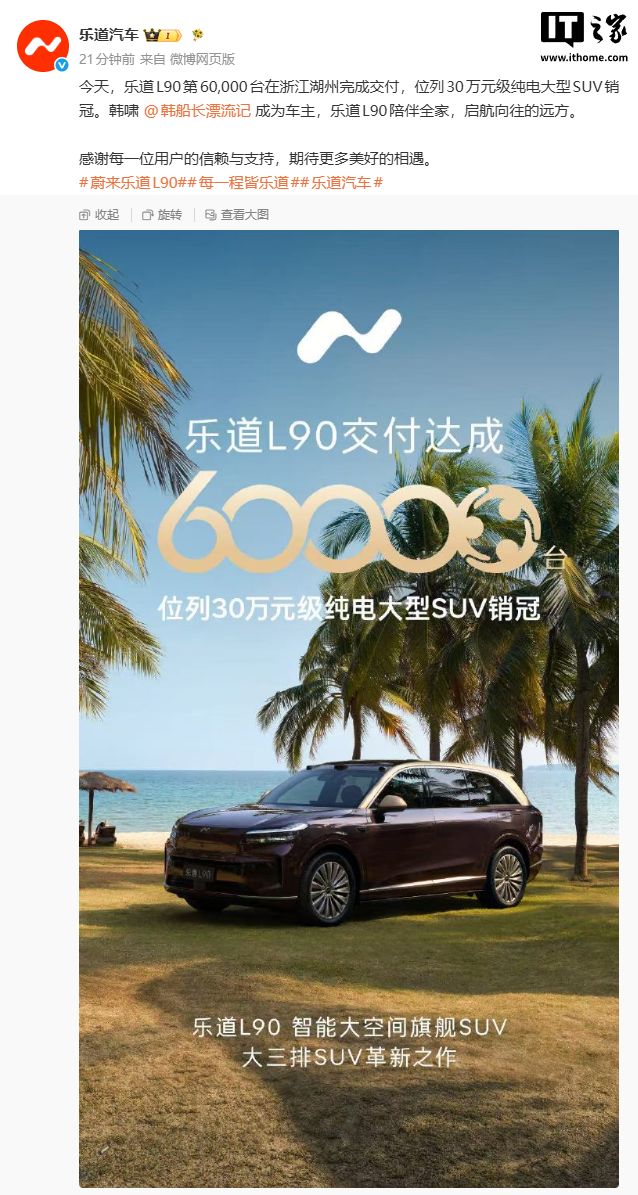
- Sub-brand ONVO's first model, the L90, became an instant hit upon launch, with June deliveries exceeding 60,000 units
Zeekr: Near-Doubling 97% Growth
Zeekr delivered 178,400 units in H1, up 97% year-on-year, nearly doubling. Driving factors:
- 001, 007, 009 models have established differentiated positioning in their respective segments
- Zeekr 001 continues to sell well, becoming a benchmark product in the 250,000-350,000 yuan pure electric sedan market
- Channel expansion accelerating, with steady growth in direct-store numbers
Xiaomi Auto: Exceeding 180,000 in Debut Year
Xiaomi Auto delivered over 180,000 units in H1 — an extremely impressive achievement for a brand in its first year of delivery. Xiaomi's breakout logic:
- Ecosystem synergy effect: Xiaomi phone and smart home users converting to automobile purchases
- Traffic dividend: The brand carries extremely high attention, with marketing costs lower than traditional automakers
- Focused product strength: The debut model SU7 has established distinctive branding in design, performance, and intelligence
Under Pressure: Xpeng's Decline and Adjustment
Xpeng delivered 165,000 units in H1, down 15.8% year-on-year, facing clear pressure. However, Xpeng launched the Mona L03 on July 16, securing over 20,000 firm orders within 7 minutes of launch, demonstrating strong order reserves. Key factors for Xpeng's H2 recovery:
- Mona L03 production ramp-up and delivery fulfillment
- Whether intelligent driving technology (VLA 2.0) differentiation can translate into sales
- Overseas market expansion progress
H2 Outlook: Elimination Round Enters Critical Stage
Entering the second half, the startup camp will face an even more complex competitive environment:
- Intensive new model launches: Xiaomi Pengcheng series, Xpeng G9L, NIO ET9 and other heavyweight models will be concentrated in the market
- Rising cost pressure: Battery raw material price fluctuations, chip supply tightness and other factors may push up costs
- Market contraction risk: Macroeconomic environment uncertainty may affect consumer confidence
From a full-year target completion rate perspective, Leapmotor, Zeekr, and Xiaomi are likely to exceed targets; Li Auto and Xpeng need to achieve significant month-on-month growth in H2 to meet their goals. 2026 is likely to become a critical watershed for the startup "elimination round" — the trend of head-brand concentration will further strengthen, while mid-tier brands will face sustained survival pressure.
EX1000.COM will continue tracking startup brand delivery dynamics and market performance.