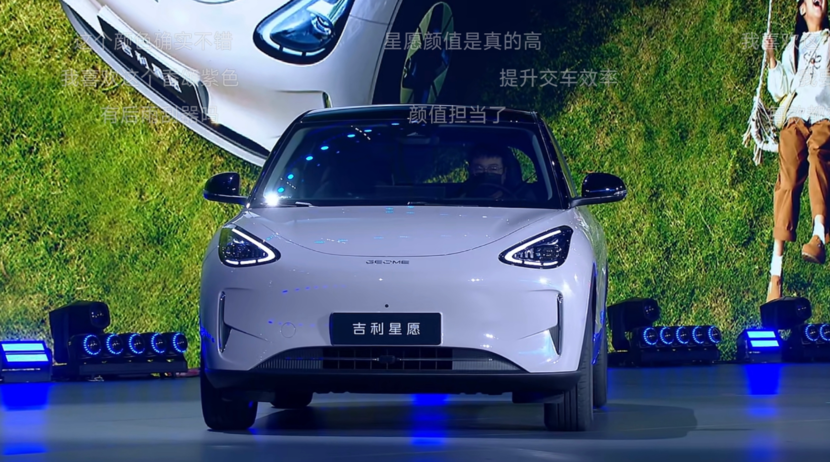
In H1 2026, China-Brazil trade reached a record high. China's NEV exports to Brazil totaled $5.35 billion, with pure electric vehicles surging nearly fourfold to approximately $2 billion. China is now Brazil's largest NEV import source, accounting for 88% of the country's NEV imports.
Trade Overview: Record-Breaking China-Brazil Trade
The Brazil-China Business Council (CEBC) latest report shows China-Brazil trade hit record highs in H1 2026:
- Brazil's exports to China: $58.3 billion, up 22% YoY
- Brazil's imports from China: $38.5 billion, up 8% YoY
- China-Brazil trade surplus: $19.8 billion, accounting for 47% of Brazil's global trade surplus ($42.4 billion)
China is now Brazil's largest export destination and largest import source. In H1 2026, Brazil's exports to China accounted for 31.6% of its total exports, while exports to its second-largest trade partner, the United States, made up only 9.4%. Brazil's imports from China represented 27% of total imports, double the share from the United States (13.3%).
NEVs: The Core Driver of China-Brazil Trade
New energy vehicles have been the central engine of China-Brazil trade growth in H1 2026. Chinese NEVs account for approximately 15% of Brazil's total imports from China, and 88% of Brazil's NEV imports. China has become the dominant source of NEVs for Brazil.
Chinese NEV exports to Brazil span three categories:
- Battery Electric Vehicles (BEV): Export value of approximately $2 billion, up nearly fourfold YoY
- Plug-in Hybrid Vehicles (PHEV): Export value of $2.79 billion, up 100% YoY
- Hybrid Vehicles (HEV): Export value up 239%, rising from 25th place in Brazil's import structure in H1 2025 to 6th place in H1 2026
Total NEV exports to Brazil in H1 2026 reached $5.35 billion.
Tariff Policy Drives the "Rush Export" Effect
The evolution of Brazil's auto import tariffs is the direct catalyst behind this export surge:
| Timeline | BEV Tariff | HEV Tariff |
|---|---|---|
| Jan 2024 | 10% | 15% |
| Jul 2024 | 18% | 25% |
| Jul 2026 | 35% | 35% |
Brazil previously exempted imported NEVs from tariffs, but began restoring duties in 2024, with the full 35% rate applying by July 2026 — equal to ICE vehicle tariffs. Chinese automakers rushed exports during H1 to capitalize on the final low-tariff window, resulting in 380,000 vehicles exported to Brazil in the first five months, up 312% YoY.
CEBC Research Director Tulio Cariello predicts that with higher tariffs and BYD, Great Wall Motor, and others already establishing local production bases in Brazil, Chinese NEV exports to Brazil will stabilize in H2 2026.
Brazil: China's Gateway to Latin America
As Latin America's largest economy with an annual auto market exceeding 2 million units, Brazil has become a critical hub for Chinese automakers' overseas expansion. Its large market size, growing electrification demand, and room for affordable vehicles make it an ideal launchpad.
Chinese Brands' Performance in Brazil
- BYD: In March 2026, BYD sold 16,400 units in Brazil, ranking fifth with 103.5% YoY growth; the Seagull (Mini) entered the top 10 best-selling models
- Chery: Monthly sales exceeded 10,000 units, with the Tiggo series being local favorites
- Great Wall Motor: Tank and Haval series are accelerating rollout in Brazil
By March 2026, Chinese brands collectively held 17.5% market share in Brazil, reshaping the local competitive landscape.
Local Production: From Export to Roots
Faced with rising tariffs, Chinese automakers are accelerating local production in Brazil:
- BYD: Plans to produce its first vehicles in Brazil by March 2025, creating 10,000 direct jobs by end of 2025 and 20,000 by end of 2026; building three factories in Bahia state (passenger vehicles, battery materials, electric buses)
- Great Wall Motor: Iracemápolis factory prepared for production, starting in H1 2025
- Changan Auto: Has begun local production in Brazil
The Brazilian government is actively attracting Chinese automaker investment. The "Green Mobility and Innovation Program" (Mover) passed in June 2024 plans to provide 19.3 billion reais (approximately 23.5 billion yuan) in credit and tax support from 2024 to 2028 to encourage green technology development.
Other Pillars of China-Brazil Trade
Despite the NEV spotlight, traditional trade pillars remain solid. Brazil's exports to China are dominated by soybeans, crude oil, iron ore, and beef, which together accounted for 84.8% of Brazil's total exports to China in H1 2026. China's exports to Brazil focus on machinery, electronics, and manufactured goods.
This trade structure reflects the complementarity of the two economies: Brazil provides raw materials and agricultural products, while China provides high-value manufactured goods, including increasingly important NEVs.
Market Outlook and Strategic Implications
For automotive buyers and dealers focused on Brazil and Latin America, the current landscape presents several key dynamics:
- Short-term: After July's full tariff restoration, complete vehicle import costs will rise significantly, potentially eroding price advantages
- Medium-term: BYD, Great Wall, and others' local factories coming online will make locally assembled models more cost-competitive
- Long-term: Brazil's NEV penetration rate still has enormous upside, with smart cockpits and ADAS being Chinese brands' core differentiators
Brazil's proven model — using CBU exports to open the market, then solidifying position through local production — provides a replicable playbook for Chinese automakers entering other Latin American markets including Mexico, Argentina, and Chile. For more Latin American automotive trade insights, visit EX1000.COM.