In H1 2026, China's automotive topic traffic and click-through rates plummeted, with prominent auto commentators exiting the field and content creators seeing sharp income declines. The triple pressure of stock competition, rational consumption, and content homogenization is reshaping the auto content ecosystem.
A "Recession" Signal Across the Industry
"Carefully written articles, videos edited for days—click rates peak at ten thousand, bottom out at just a few dozen... media companies delay payments by a year if they can. Keep going and I won't even afford instant noodles."
This rant from a well-known automotive commentator resonated widely in July 2026. This industry insider, once established in the automotive product review space, ultimately decided to quit. His experience is not an isolated case—over the past half-year, the automotive industry's topic traffic has seen a marked decline. Whether focused on products, brands, or the broader industry, both attention and click-through rates have fallen significantly.
More notably, this decline is not limited to individual creators. Even leading automotive media institutions and traditional vertical media outlets have seen click-through rates slide. The only topics that maintain heat are those already on the trending list.
Three Drivers Behind the Traffic Decline
The "recession" of the auto content ecosystem is no accident—it is the result of three structural pressures converging:
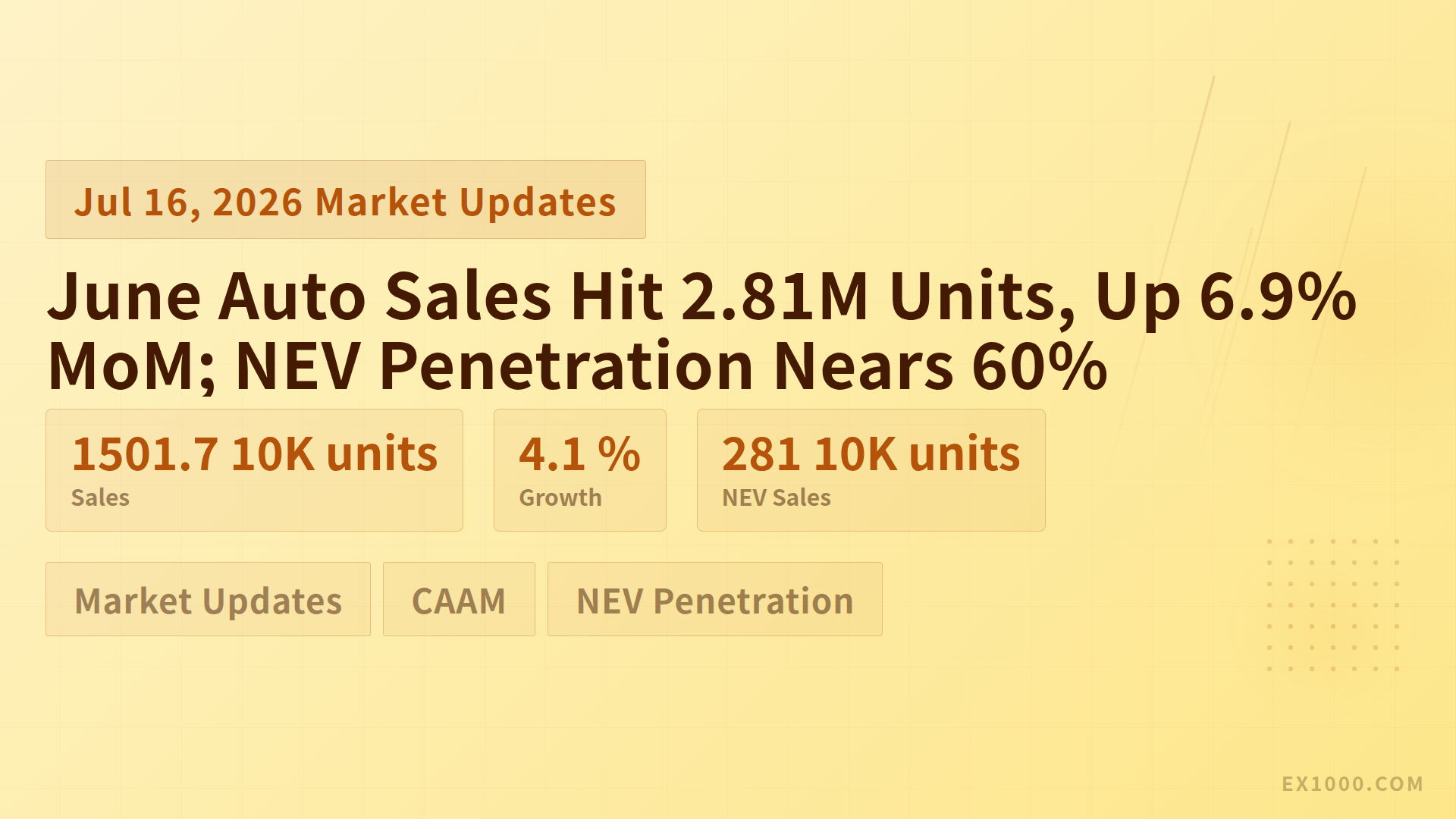
- Market entering stock competition: In H1 2026, China's auto sales totaled 15.017 million units, down 4.1% YoY. While the decline narrowed, the market has shifted from expansion to stock competition. Consumers are making more rational purchase decisions, reducing reliance on "seeding" content.
- Severe content homogenization: A large number of auto creators use similar topics, filming techniques, and review language. Users have developed aesthetic fatigue toward the cookie-cutter acceleration tests, exterior commentary, and feature lists. The core issue with homogenized content is that it offers no differentiated value.
- Accelerated consumer rationalization: After two years of price wars, consumers are less sensitive to specs and configurations, focusing more on real-world experience and long-term ownership costs. Simple information-dump content no longer meets their decision-making needs.
From Traffic Logic to Value Logic
Behind the traffic decline lies a deep restructuring of the auto content ecosystem. In the past, the ecosystem was built on an "information gap"—creators had more product, channel, and pricing information than ordinary consumers, and monetized this through content and advertising.
But in 2026, this logic is unraveling:
- Information transparency has surged: OEM official channels, dealer livestreams, and user communities already provide sufficiently rich product information
- User decision paths have shifted: Consumers have moved from "being seeded" to "active search + comparative verification," reducing dependence on single sources
- Algorithm distribution has adjusted: Platform algorithms increasingly favor content with high interaction and completion rates, while long-form articles and deep videos naturally have lower completion rates
Where Is the New Path for Auto Media?
The traffic recession does not mean auto content has no value—it means the value logic needs recalibration. In the stock competition era, surviving creators must possess the following characteristics:
- Professional depth: Going beyond spec lists to offer technical teardowns, long-term usage reports, and scenario-based analysis
- Differentiated perspectives: Beyond reviews, exploring niche tracks like supply chains, exports, used cars, and modifications
- Cross-platform capability: Expanding from single-format text/video to podcasts, livestreams, and community engagement
- Data-driven approach: Using real market data, actual transaction prices, and residual value rates as hard metrics to build content moats
The auto content ecosystem is undergoing a painful shakeout. For practitioners in global automotive sourcing platforms, observing the evolution of China's content ecosystem also provides a reference for understanding consumer information acquisition habits in target markets. For more industry analysis, visit EX1000.COM.