H1 2026 domestic passenger vehicle sales rankings reveal a striking anomaly: while NEV penetration continues climbing across segments, the mid-size sedan category remains the only stronghold where ICE vehicles maintain high market share and resilience.
Data Contradiction: Mid-Size Sedans Become ICE's Last Standing Fortress
Reviewing H1 2026 domestic passenger vehicle sales rankings, a striking industry anomaly emerges: as NEV penetration continues rising, leading positions in most segments have been captured by new energy models, yet in the mid-size sedan segment, ICE vehicles retain high share and remarkable resilience—becoming one of the few remaining strongholds for the ICE camp.
Mid-Size Sedan Market Structure Analysis
The mid-size (B-segment) sedan market has long been a stronghold for joint-venture brands. Traditional dominant models continued to post strong sales in H1 2026:
- Honda Accord: Terminal discounts drove June sales back to 7,797 units, backed by deep brand heritage
- Toyota Camry: Hybrid variants remain the main volume driver, while pure-electric/PHEV versions have yet to achieve scale breakthrough
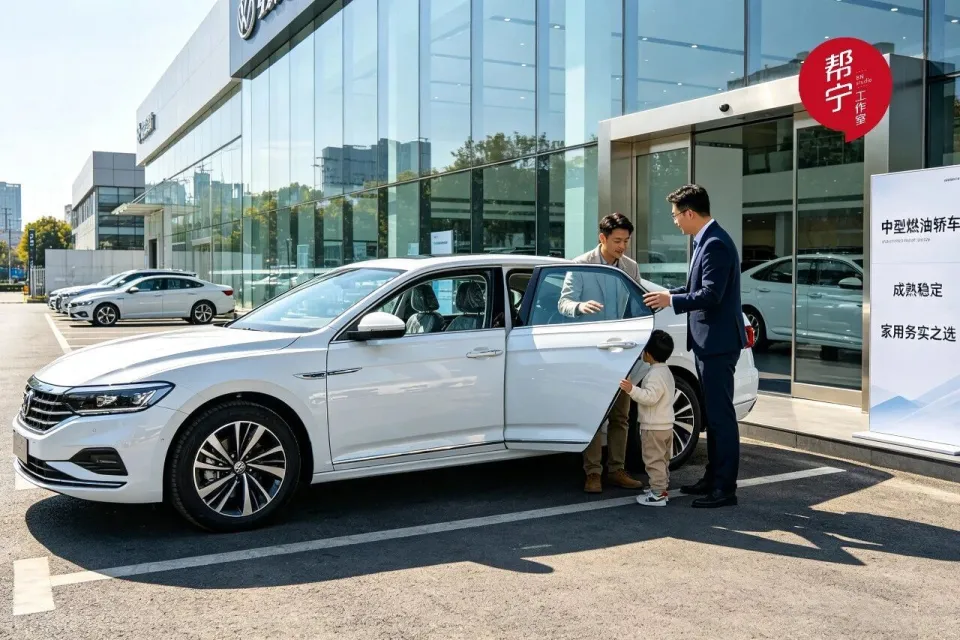
- Volkswagen Passat: German quality reputation sustains its stable position in the mid-size segment
| Dimension | Leading NEV Performance | Traditional ICE Performance | Reason for Contrast |
|---|---|---|---|
| Compact sedans | BYD Qin PLUS, Wuling Bingo dominate | Share significantly shrunk | Price-sensitive, NEV value advantage large |
| Mid-large sedans | NIO ET7, Zeekr 001 lead | Luxury brands passively follow | Premium users more willing to adopt new tech |
| Full SUV spectrum | NEV leaders hold 70%+ share | ICE only defends low end | Spacious, easy to accommodate battery packs |
| Mid-size sedans | NEV penetration relatively low | Accord, Camry, Passat remain resilient | Brand heritage, driving quality preference |
Deep Logic Behind ICE's Resilience
Why is mid-size sedan consumer acceptance of NEVs relatively lower? Industry analysis identifies three structural factors:
- High brand heritage weight: Mid-size sedan buyers place greater emphasis on brand history and reputation accumulation. Models like Accord, Camry, and Passat have cultivated the Chinese market for over two decades, and brand trust cannot be replicated by NEV brands in the short term
- Driving quality sensitivity: Mid-size sedan users prioritize chassis tuning, NVH performance, and high-speed stability. Traditional ICE vehicles still hold advantages in power linearity and chassis maturity, while NEV models (especially early products) have yet to fully convince on chassis quality and high-speed energy consumption
- Full lifecycle cost consideration: Mid-size sedan consumers typically have longer replacement cycles (5-7 years) and are more sensitive to long-term use costs, residual value, and maintenance convenience. Uncertainties around NEV models' used-car residual value, insurance costs, and battery degradation keep some consumers in a wait-and-see mode
NEV Breakthrough Points
Despite the current ICE dominance in mid-size sedans, the NEV camp is attacking from two directions:
- Price penetration: Models like BYD Seal and Changan Deepal SL03 have pulled mid-size NEV sedan prices into the 150,000-200,000 yuan range, directly competing with the core price bands of Accord and Camry
- PHEV route: Technologies like BYD DM-i and Geely Thor Hi·X, which combine pure-electric driving experience with zero range anxiety, are gradually dismantling the psychological barrier that "ICE = more reliable"
In the long run, NEV transformation of the mid-size sedan market is only a matter of time. The "ICE resilience" shown in H1 2026 data is more a short-term phenomenon of brand inertia and consumer psychology lag, rather than a fundamental gap in technology and product capability. As NEV models continue improving in chassis tuning, high-speed energy consumption, and residual value, the restructuring of the mid-size sedan segment will accelerate.
Mapping for Overseas Markets
For overseas markets like Central Asia and Russia, the evolution of China's mid-size sedan market holds significant reference value. The current ICE dominance in the B-segment means traditional joint-venture brand mid-size sedans (like Accord and Camry) still retain strong brand recognition and channel foundations in overseas markets. Chinese NEV brands seeking breakthroughs in overseas B-segment markets must continue investing in three dimensions: brand trust building, driving quality tuning, and after-sales service systems. For overseas distributors, product sourcing for mid-size sedans still requires differentiated allocation between ICE and NEV based on local consumer preferences. For more information, visit EX1000.COM.