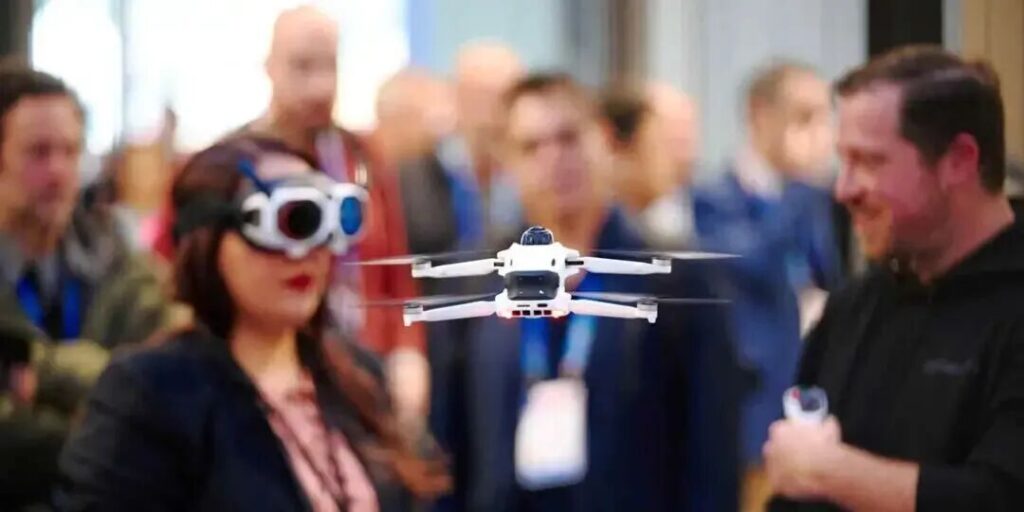
Panoramic camera brand Insta360 has officially announced its entry into robotics. Meanwhile, LiDAR leader Robosense disclosed its robot business surged 510% year-on-year in the first half. The convergence of imaging and perception technologies is injecting new variables into China's robotics industry.
Two Crossover Signals Converge
This week, two seemingly independent but intrinsically connected events occurred in China's tech sector:
Insta360 — a leading global panoramic camera brand, officially announced its entry into robotics
Robosense — China's LiDAR leader, robot business surged 510% year-on-year in H1
One company enters from the imaging side, the other from the perception hardware side, yet both converge on the same track: robotics.
Insta360: Imaging DNA Extends to Robotics
Insta360 is globally renowned for panoramic and action cameras. Its core technologies — high-resolution panoramic imaging, real-time stitching algorithms, and stabilization — have natural migration value in robotics:
Visual navigation: Panoramic cameras provide 360-degree environmental perception for robots
SLAM mapping: Real-time stitching technology directly enables robot localization and mapping
Remote monitoring: Stabilization and HD quality make robots mobile eyes
Insta360's advantages in entering robotics:
Mature visual algorithms: Years of accumulated image processing and real-time stitching technology
Global brand: Products already cover 170+ countries and regions
Supply chain experience: From consumer electronics to professional imaging supply chain management
Robosense: LiDAR's Robot Explosion
If Insta360 represents the "visual" crossover, Robosense represents the "perception" explosion.
Key Data Points:
Robosense robot business surged 510% year-on-year in H1
This growth rate far exceeds its automotive LiDAR business
Robotics has become Robosense's second growth curve
Robosense robot business growth drivers:
Application Scenario | LiDAR Value | Growth Potential |
|---|---|---|
Industrial robots | High-precision positioning, obstacle avoidance | High |
Service robots | Environmental perception, path planning | High |
Outdoor robots | All-weather perception, long-range detection | Medium-high |
Autonomous delivery | Real-time obstacle identification | High |
China's Robotics Industry Variables
The convergence of these two crossover events reveals deep trends in China's robotics industry:
Accelerating Technology Fusion:
Visual + LiDAR fusion perception is becoming the standard for robots
Boundaries between consumer electronics, autonomous driving, and robotics are blurring
Modular combinations of algorithms, sensors, and actuators lower entry barriers
Application Scenario Explosion:
Industrial: Factory automation, warehouse logistics, quality inspection
Service: Hospitality, food service, healthcare, education
Consumer: Home cleaning, companionship, entertainment
Specialized: Inspection, rescue, agriculture
Competitive Landscape Reshaping:
Traditional robotics companies face competition from tech giants crossing over
Technology companies with visual or perception advantages are rapidly entering
Robotics is evolving from "specialized equipment" to "general-purpose platform"
Radiation Effects on the Automotive Industry
Insta360 and Robosense's robotics moves also have profound implications for the automotive industry:
Autonomous driving technology spillover: Perception, decision-making, and control technologies accumulated in autonomous driving directly migrate to robotics
Supply chain synergy: Automotive-grade sensors, motors, and controllers spill over to the robotics market, reducing costs
Talent flow: Talent from autonomous driving is migrating to robotics, accelerating technology iteration
Key Data Points:
Robosense robot business growth rate reached 510%, far exceeding industry average
Insta360's global user base covers 170+ countries and regions
China's robotics market is expected to exceed $20 billion in 2026
For buyers tracking China's tech industry globalization, EX1000.COM believes robotics is becoming the next major growth engine after NEVs. The entry of Insta360 and Robosense signals that Chinese tech companies' role in the global robotics industry is shifting from "follower" to "definer."