In 2026, autonomous driving technology continues to iterate and upgrade. L3 conditional autonomous driving technology has been deployed on multiple models, power battery wireless charging technology has entered pre-production testing, and end-to-end autonomous driving algorithms have become a new industry focus. Mainstream automakers are accelerating the popularization of high-level intelligent driving functions, with city NOA coverage continuing to expand.
In 2026, autonomous driving technology entered a critical iteration period. The leap from L2+ to L3, application of end-to-end algorithms, and breakthroughs in wireless charging technology are reshaping the intelligent travel experience.
L3 Autonomous Driving Technology Deployment
L3-level (conditional autonomous driving) technology became the industry focus in 2026. Unlike L2-level (combined driving assistance), L3 allows the system to fully take over driving tasks under specific conditions, with drivers not required to continuously monitor road conditions but needing to take over when requested by the system.
Technical Implementation Path
Mainstream automakers adopt multi-sensor fusion solutions to achieve L3-level functions:
LiDAR + Vision Fusion:NIO ET9 is equipped with 1550nm LiDAR with detection range up to 500 meters, combined with 11 8-megapixel cameras to build a 360-degree perception system. XPeng XNGP adopts dual LiDAR + vision fusion solution to achieve full city NOA coverage.
HD Map + Real-time Perception:Huawei ADS 3.0 adopts "map-free NCA" technology, breaking away from dependence on HD maps, achieving navigation-assisted driving through real-time perception and cloud crowd-sourced maps. Baidu Apollo City Driving covers over 300 cities including Beijing, Shanghai, Guangzhou, and Shenzhen.
End-to-end Large Models:Tesla FSD V12 adopts end-to-end neural networks, integrating perception, prediction, planning, and control into a single model. Domestic automakers follow: Li Auto AD Max 3.0, NIO NAD, and XPeng XNGP all adopt end-to-end architecture, with system response speed improved by 40%.
Deployment Progress
In 2026, the following models are equipped with or will soon be equipped with L3-level functions:
NIO ET9: Standard L3-level hardware, expected to push city NOA via OTA in Q3 2026
XPeng X9: XNGP 4.0 achieves nationwide availability of city NOA
Li Auto MEGA: AD Max 3.0 supports highway NOA and city NOA
Aito M9: Huawei ADS 3.0 achieves map-free NCA nationwide availability
Zeekr 007: Haohan intelligent driving system supports city NZP
Policy and Regulatory Progress
China's L3 autonomous driving policy and regulatory framework is gradually improving:
Access Pilot:In June 2024, the Ministry of Industry and Information Technology and three other departments issued the "Notice on Launching Intelligent Connected Vehicle Access and Road Pilot Work," allowing L3/L4 autonomous driving vehicles on roads for pilot testing. As of June 2026, over 20 models have obtained access qualifications.
Liability Determination:L3 accident liability determination has become a focus. Current regulations clarify: in system-activated state accidents, automakers bear primary responsibility; accidents caused by drivers failing to take over as prompted by the system are the driver's responsibility. Insurance companies are developing L3-specific insurance products.
International Standard Alignment:China is promoting international mutual recognition of L3 autonomous driving standards, conducting technical dialogues with the EU, Japan, South Korea, and others to clear regulatory obstacles for autonomous driving vehicle exports.
Power Battery Wireless Charging Technology
Wireless charging technology became another hot topic in 2026:
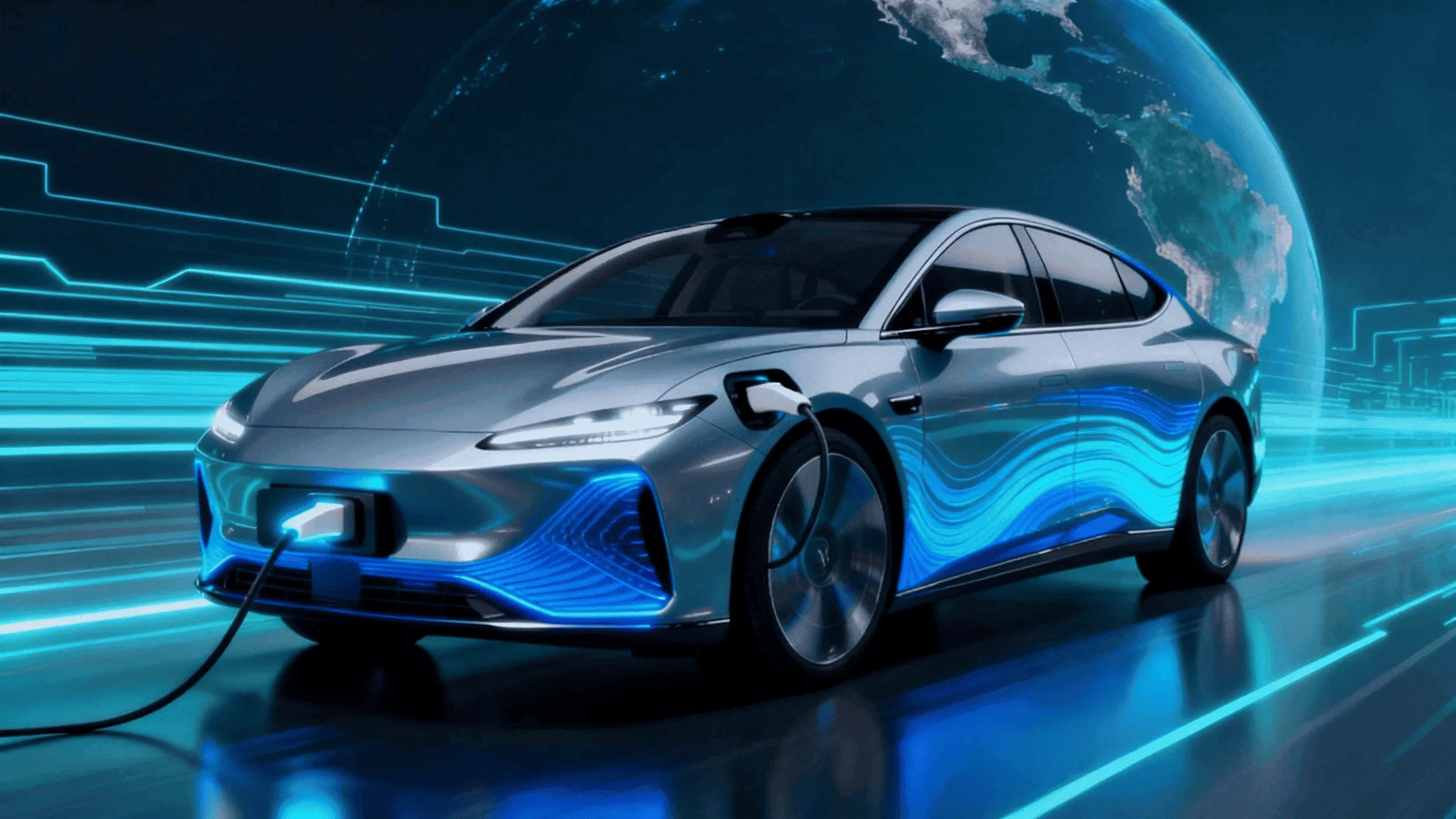
Technical Principle:Based on electromagnetic induction or magnetic resonance principles, the charging plate (ground side) and vehicle receiver plate (vehicle side) transmit energy through magnetic field coupling, without physical plugging. Charging efficiency can reach 90%-95%, with power coverage of 3.6kW-11kW.
Mass Production Progress:
BMW: iX equipped with 11kW wireless charging system, 93% charging efficiency, expected mass production by end of 2026
Volkswagen: ID. series plans to standardize wireless charging in 2027, 7.2kW power
Hyundai: IONIQ 6 equipped with 8.8kW wireless charging system, currently piloting in South Korea
WiTricity: Cooperating with multiple automakers to promote 11kW wireless charging standard unification
Application Scenarios:Wireless charging mainly targets fixed scenarios (home garages, office parking lots) and dynamic scenarios (highway wireless charging lanes). Dynamic wireless charging technology is still in the experimental stage, expected to commercialize after 2030.
Industry Challenges
Autonomous driving technology still faces multiple challenges:
Long-tail Scenarios:Corner Case handling remains difficult. In heavy rain, heavy snow, strong backlighting, construction sections, and other scenarios, system reliability still needs improvement.
Cost Pressure:L3-level hardware costs (LiDAR, high computing power chips, multiple sensors) are approximately 3-5 times that of L2-level. Balancing cost and functionality to achieve high-level intelligent driving popularization in vehicles priced below 200,000 yuan is an industry-wide challenge.
Consumer Trust:L3 accident liability determination is complex, and consumers have doubts about system reliability. Market education requires time and actual validation.
Data Security:Autonomous driving systems collect large amounts of road and driving data, with compliance pressure on cross-border data transmission and storage.
Future Outlook
未来市场趋势:
新能源汽车渗透率将持续攀升,全年有望突破60%
中国品牌乘用车市占率稳步增长,或将突破75%
汽车出口规模持续扩大,全年出口有望突破1000万辆
以旧换新政策将进一步刺激内需恢复
In 2026-2027, autonomous driving technology will show three major trends:
City NOA Popularization:Expanding from first-tier cities to second- and third-tier cities, expected to cover major cities nationwide by end of 2027.
L3-level Scale Mass Production:As costs decrease and regulations improve, L3-level functions will penetrate from high-end models above 300,000 yuan to mainstream models in the 200,000 yuan range.
Vehicle-Road Collaboration Deepening:V2X (Vehicle-to-Everything) technology moves from demonstration zones to scale deployment, achieving real-time interaction between vehicles, roads, and clouds.
EX1000.COM believes that 2026 is a critical node for autonomous driving technology moving from "laboratory" to "scaled application." The deployment of L3-level technology will change consumer perceptions of intelligent vehicles, and the maturation of wireless charging technology will further enhance EV usage convenience. Chinese automakers' technical accumulation in intelligent driving will become an important chip in their global competition.