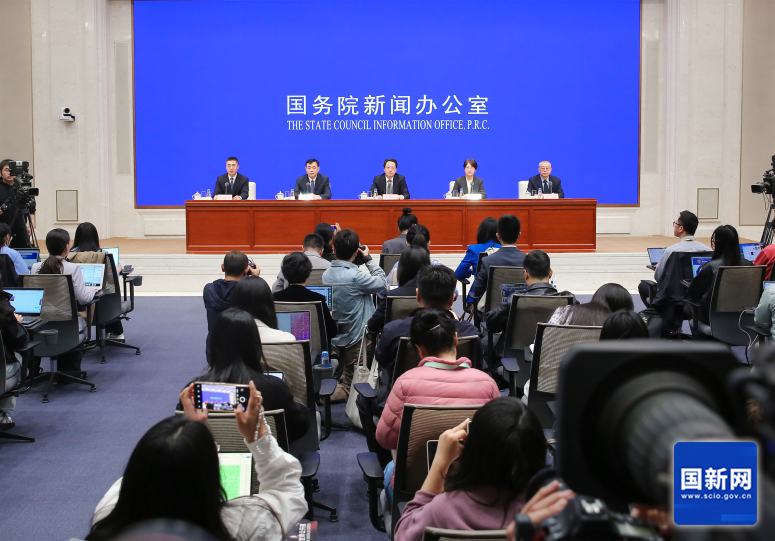
On June 25, 2026, China's Ministry of Industry and Information Technology announced that at the 199th plenary session of the UN World Forum for Harmonization of Vehicle Regulations (UN/WP.29) held in Geneva, Switzerland, the UN Global Technical Regulation on Autonomous Driving Systems (ADS GTR) — jointly led by China, the EU, the UK, the US, Canada, and Japan — was formally approved by vote of all contracting parties. This is the world's first autonomous driving technical regulation, providing unified guidance for the orderly and safe deployment of autonomous driving technology, and represents a milestone in accelerating the industrialization of autonomous vehicles and promoting the intelligent transformation of the global automotive industry.
From June 22 to 26, 2026, the 199th plenary session of the UN World Forum for Harmonization of Vehicle Regulations (UN/WP.29) was held in Geneva, Switzerland. On June 25, China's Ministry of Industry and Information Technology released official information that the UN Global Technical Regulation on Autonomous Driving Systems (ADS GTR) — jointly led by China, the EU, the UK, the US, Canada, and Japan — was formally approved by vote of all contracting parties.
Birth of the World's First Unified Autonomous Driving Regulation
Previously, no complete and unified autonomous driving technical standard or regulatory system existed at the global level or in major countries and regions. Each nation primarily advanced R&D and application based on its own experience, resulting in prominent regulatory fragmentation. Developing a globally unified autonomous driving system technical regulation had become a consensus among industry stakeholders. The MIIT stated that as the world's first autonomous driving technical regulation, this standard provides unified guidance for the orderly and safe deployment of autonomous driving technology, representing a milestone in accelerating autonomous vehicle industrialization and promoting intelligent transformation of the global automotive industry.
China's Deep Engagement and Leading Role
China played an important leading role in the development of this regulation, reflecting the continuous enhancement of the Chinese automotive industry's voice in the global intelligent connected vehicle field. In recent years, China has accumulated rich experience in autonomous driving technology R&D, road testing and demonstration, and standard and regulation formulation, contributing Chinese wisdom and Chinese solutions to the development of global autonomous driving regulations.
Regulatory Content and Technical Framework
The ADS GTR covers multiple dimensions including safety requirements for autonomous driving systems, performance testing, functional safety, cybersecurity, and data recording, providing unified technical standards and an evaluation framework for L3 and above autonomous vehicles to operate on public roads. The regulation requires autonomous driving systems to possess full-chain capabilities in perception, decision-making, and execution, ensuring safe operation within the design operational domain. It also sets clear requirements for ADS verification and validation, human-machine interaction, and system updates.
Far-Reaching Impact on Chinese Automakers' Overseas Expansion
The approval of this regulation will significantly reduce regulatory barriers facing Chinese autonomous driving technology in overseas markets. Previously, Chinese automakers had to adapt to local regulations separately in different countries and regions when promoting autonomous driving technology, resulting in high costs and long cycles. With the implementation of unified regulations, Chinese autonomous driving systems that comply with ADS GTR standards will be able to achieve mutual recognition among contracting party states, accelerating the commercial deployment of Chinese intelligent driving technology in global markets. According to authoritative forecasts, China's intelligent driving market reached 455 billion yuan in 2025, and will grow from 455 billion to 1,560 billion yuan between 2026 and 2030, with a CAGR of approximately 28%.
Key Takeaways
China's new energy vehicle technology continues to lead globally
Overseas market expansion accelerates, with Central Asia/Russia as key focus
Policy support increases, trade-in programs stimulate domestic demand
The trend toward intelligence and electrification is irreversible
The MIIT stated that the next step will continue deep participation in the formulation and coordination of international standards and regulations in the intelligent connected vehicle field, while accelerating the release and implementation of domestic mandatory national standards. Concurrently, efforts will deepen intelligent connected vehicle road testing demonstrations, Vehicle-Road-Cloud Integrated application pilots, production access and on-road operation pilots, further improving technical standards and regulatory solutions to ensure safe and compliant deployment of autonomous driving products, comprehensively leading the high-quality development of China's intelligent connected vehicle industry. For Chinese automakers with overseas market ambitions, the release of ADS GTR means intelligent driving exports will shift from "fighting alone" to "unified standards," substantially reducing compliance costs. EX1000.COM will continue tracking the implementation progress of ADS GTR across contracting parties and its impact on Chinese automakers' overseas strategies.