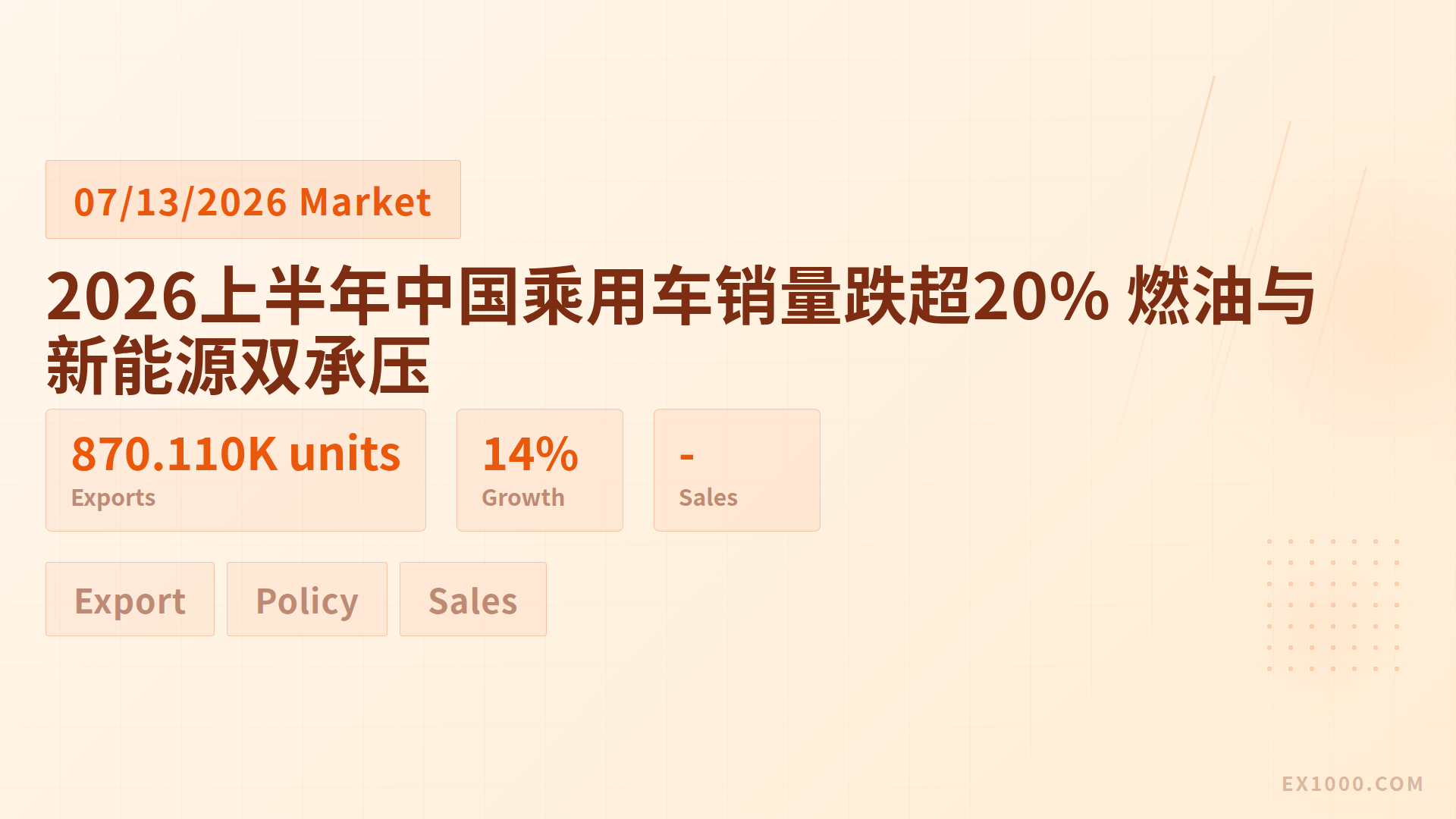
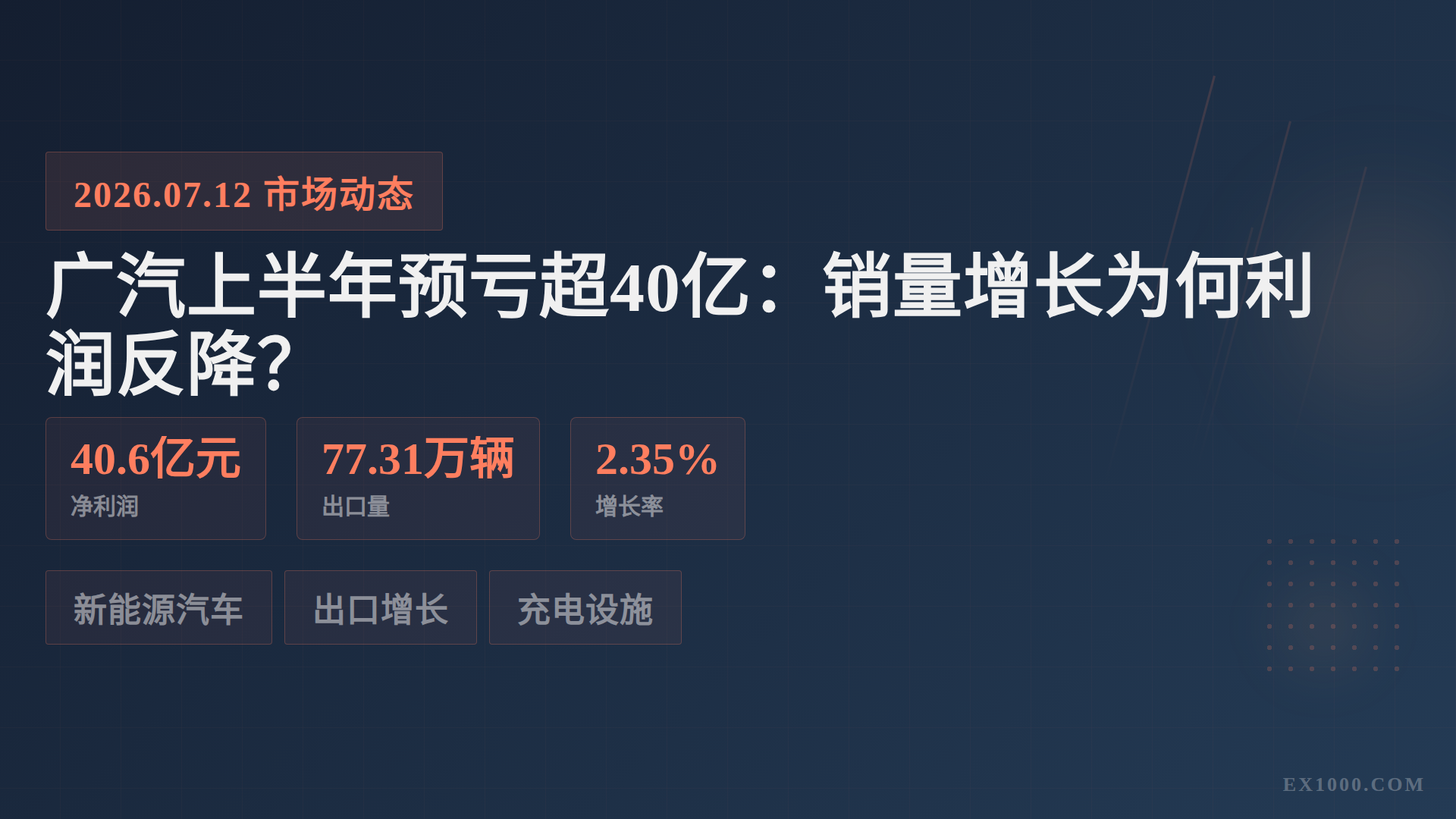
In May 2026, 23 A-share and H-share listed automakers sold a combined 2.0491 million units, up 2.21% year-over-year. Against the backdrop of overall industry slowdown, export has become the core growth engine — Geely and GAC Group's exports doubled year-over-year, while NIO and Zhongtong Bus growth exceeded 60%. Divergence is intensifying: leading automakers sustain growth through overseas expansion, while brands relying primarily on the domestic market face clear pressure.
May Sales Overview: Export Underpins Growth, Internal Divergence Intensifies
In May 2026, 23 listed automakers sold a combined 2.0491 million units, up 2.21% year-over-year. While modest, this growth is commendable given the industry's headwinds of weak domestic demand and persistent price wars. More notable is the structure: export growth far outpaced domestic sales, becoming the core force underpinning industry growth.
From a growth dynamics perspective, three key characteristics emerged in May:
- Export doublers: Geely and GAC Group's exports doubled year-over-year, the brightest highlights
- 60%+ growth: NIO and Zhongtong Bus exceeded 60% year-over-year growth, with both new forces and commercial vehicles surging
- Internal divergence: Traditional brands overly dependent on the domestic market faced sales pressure, growing below industry average
Geely and GAC: The Strategic Logic Behind Export Doubling
Geely Holding Group's May export performance was particularly standout, with export volume doubling year-over-year. This achievement is no accident — it's the concentrated payoff of years of overseas investment:
- European market: Zeekr brand entered the Netherlands, Sweden, and Norway, with monthly deliveries exceeding 3,000 units
- Southeast Asian market: Proton brand continues to dominate the Malaysian market, with share exceeding 40%
- Middle East market: Lynk & Co entered Saudi Arabia and the UAE, with its premium positioning yielding clear results
GAC Group's export doubling is equally strategically significant. Its Aion brand entered ASEAN markets including Thailand and Vietnam for the first time, while its Trumpchi brand accelerated its Russia presence. GAC's going-global strategy centers on "ASEAN first, Russia follow-up", building deep partnerships with local dealers.
NIO's 60%+ Growth: New Force Resilience
NIO's May delivery growth exceeded 60%, the brightest performance among new forces. This growth primarily derives from:
- Complete product matrix: ET5, ES6, and EC6 cover the core 250K-400K yuan segment
- Battery swap network expansion: As of end-May, nationwide swap stations exceeded 3,000, covering over 200 cities
- BaaS model: Battery rental lowers purchase barriers, with user adoption exceeding 50%
Notably, NIO is also accelerating its overseas push. Its ET5 and EL6 models have entered Norway, Germany, and the Netherlands, with plans to enter Central Asian markets (Kazakhstan, Uzbekistan) in H2 2026.
Industry Divergence: Export-Oriented vs. Domestic-Only
May data reveals a clear industry divergence trend:
| Type | Representative | May Growth | Core Driver |
|---|---|---|---|
| Export-dominant | Geely, GAC, Chery | +80%~100% | Overseas market expansion |
| New force high-growth | NIO, Leapmotor, XPeng | +40%~60% | Product iteration + intelligence |
| Domestic-pressured | Some traditional brands | -5%~+5% | Intensified domestic competition |
| Commercial vehicle recovery | Zhongtong, Yutong | +60%~+80% | NEV bus replacement |
For overseas buyers and dealers, this divergence means export-oriented automakers' products are more trustworthy — they have not only withstood domestic competition but also established comprehensive overseas sales and service networks. Through platforms like EX1000.COM, overseas buyers can directly connect with these export-dominant automakers, accessing the latest models at optimal prices.
Outlook: Export Becomes the Normal Growth Engine
In the first five months of 2026, China's automotive exports exceeded 4.5 million units, with full-year projections approaching 11 million. Export is no longer a temporary means to "absorb domestic overcapacity" but a core growth strategy for Chinese automakers. With dedicated logistics infrastructure like Xiaomo Port coming online, and BYD, Chery, Geely and others advancing overseas factory construction (local production), China's automotive global competitiveness is upgrading from "value for money" to "brand power + supply chain + service network".